

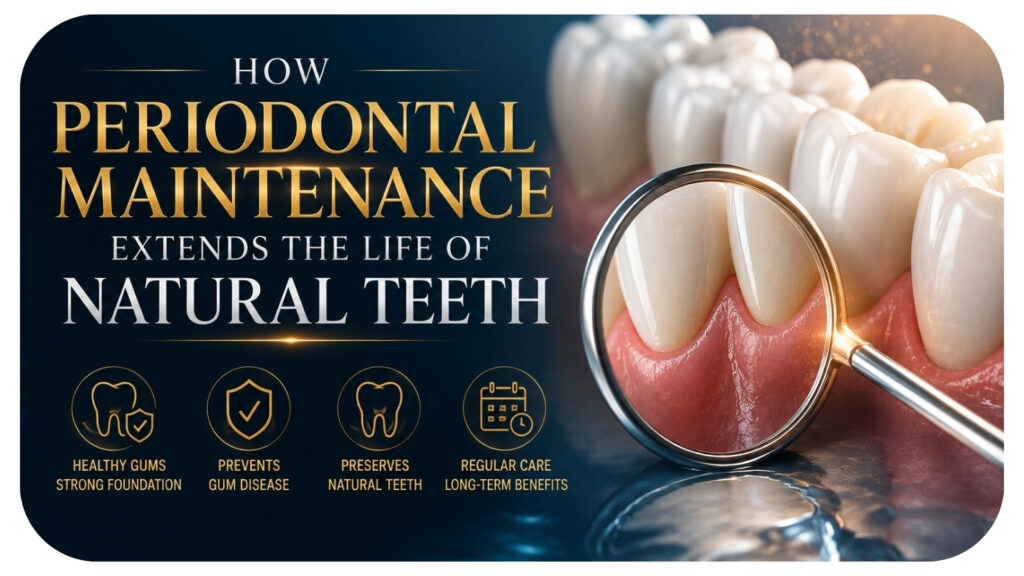
You might not think much about your gums until something feels off. Maybe your teeth look a little longer than they used to, your gums bleed when you brush, or you have that uneasy sense that something is changing in your mouth. That can be hard to sit with, especially when you are trying to protect the teeth you were born with and avoid bigger treatment later. The good news is that regular periodontal care from a trusted dental implant periodontist in Lake Ridge can slow damage, support healing, and help your natural teeth last much longer. In simple terms, periodontal maintenance is not just a cleaning. It is an ongoing way to control gum disease and protect the bone and tissue that hold your teeth in place.
Why do natural teeth become at risk when gum disease is left alone?
Most people think tooth loss starts with a cavity, but gum disease is often the deeper problem. According to the CDC’s overview of gum and periodontal disease, gum disease is common and can range from mild inflammation to serious infection that damages the soft tissue and bone around the teeth. Once that support system weakens, even teeth without large fillings or decay can become loose.
Because this damage often happens slowly, it is easy to miss. You may feel fine for months or even years while the infection keeps moving below the gumline. That is where the stress comes in. You brush, you floss when you can, and still the problem seems to keep showing up. So, where does that leave you?
It leaves you needing a different kind of care. A standard dental cleaning is meant for a generally healthy mouth. A person with a history of periodontal disease often needs more focused treatment at regular intervals. That is where gum disease maintenance becomes so important. It helps remove bacteria and hardened deposits from areas that are harder to reach, and it gives your periodontist a chance to track pocket depths, bleeding, recession, and bone support over time.
What makes periodontal maintenance different from a regular cleaning?
If you have ever wondered why your provider recommends more frequent visits after gum treatment, you are not alone. It can feel like a lot, especially if your mouth seems better. But improvement is exactly why maintenance matters. The goal is to keep the disease from becoming active again.
The National Institute of Dental and Craniofacial Research explains that gum disease begins with plaque and can progress when bacteria trigger inflammation. In deeper stages, the gums pull away from the teeth and pockets form. Those pockets can hold more bacteria, which keeps the cycle going. A routine cleaning does not always address those deeper concerns in the same way that periodontal follow up does.
Think of it this way. If you had a chronic health condition, you would not stop monitoring it just because you felt better for a while. Your gums deserve that same steady attention. periodontal maintenance extends the life of natural teeth by reducing bacterial buildup, catching relapse early, and helping preserve the bone that anchors each tooth.
How can regular periodontal care save you trouble, cost, and tooth loss later?
There is an emotional side to this that often gets overlooked. When teeth start to feel loose or your gums keep bleeding, it can shake your confidence. You may avoid smiling, put off photos, or worry that every appointment will bring bad news. Financial stress can follow too. Replacing missing teeth with bridges, dentures, or implants is often more involved and more expensive than maintaining healthy tissue around your existing teeth.
There is also a practical side. The MedlinePlus page on periodontitis notes that advanced gum disease can lead to bad breath, gum recession, pockets around the teeth, and tooth loss. Once bone is lost, it does not simply grow back on its own. That means prevention and close follow up matter a great deal.
| Approach | What It Focuses On | Likely Outcome Over Time |
|---|---|---|
| Routine cleaning only | Surface plaque and tartar in a generally healthy mouth | May not control deeper periodontal pockets in patients with gum disease history |
| Periodontal maintenance | Ongoing care for gum pockets, inflammation, and disease monitoring | Better chance of keeping natural teeth stable and catching relapse early |
| Ignoring follow up care | No active monitoring of disease progression | Higher risk of bone loss, loose teeth, infection, and future tooth loss |
For many people, the choice becomes clearer when they see the long view. Regular visits with a periodontist and implant dentist are not only about cleaning. They are about protecting what can still be saved.
What can you do right now to help your teeth last longer?
1. Keep your maintenance schedule even when your mouth feels fine.
Gum disease can become active again without dramatic pain. If your provider recommends visits every three or four months, that timing is based on how quickly bacteria can repopulate and how your gums have responded in the past.
2. Pay attention to small changes at home.
Bleeding when brushing, tenderness, bad breath that does not go away, or teeth that feel different when you bite can all be signs that something needs attention. Early action often means simpler care.
3. Ask for a clear long term plan.
You deserve to understand your pocket measurements, bone levels, and risk areas. Ask what is stable, what needs watching, and how your home care can support your treatment. Good care feels less overwhelming when you know what the plan is.
So, is preserving your natural teeth still possible?
In many cases, yes. Even if you have been told you have gum disease, that does not always mean tooth loss is around the corner. With consistent periodontal care, careful monitoring, and the right support, many people keep their natural teeth for years longer than they expected. That is the heart of it. Protecting your gums protects the foundation of your smile.
If you have been putting off follow up care, now is a good time to take the next step. A visit with a periodontist and implant dentist can help you understand where things stand and what can be done to keep your teeth as long as possible.
Recommended: The Role Of Gum Health In Successful Implant Dentistry




Leave a Reply