

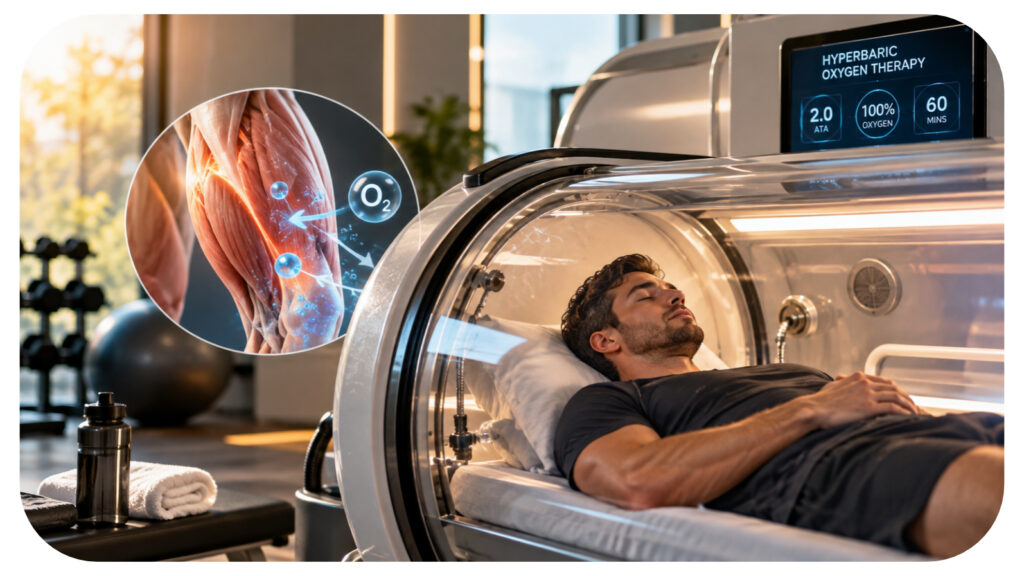
Recovery for athletes has gone Hollywood. Made for Instagram massages, cryo chambers, and IV drips have become the workout and muscle recovery norms for weekend warriors and the pros. But what actually works, so you’re not throwing away your money – and possibly hurting yourself in the process?
The soreness you feel isn’t what you think it is
That soreness you feel in your muscles 24-72 hours after a tough workout? The one people used to think was due to a build-up of lactic acid that could be “flushed” out with a good massage or some time in a hot tub? Yeah, that one. Turns out that was mostly bogus.
Delicate, beautiful flower that it is, your body gets rid of any extra lactate all on its own within an hour or two of exercise.
No, what’s actually happening is that unfamiliar or demanding exercise puts stress on muscle fibres and surrounding tissues. That triggers inflammatory signalling and brings immune cells into the affected area. The result can be tenderness, stiffness and soreness as the body responds to the strain.
So in short, it’s supposed to hurt. And here’s the thing with trying to cut a corner with products or tools designed to “alleviate” muscle soreness: if they tout lactate-flushing as a benefit, they’re using science that was gone before iPods were even a thing.
Where hyperbaric oxygen therapy actually fits
Hyperbaric oxygen therapy is based on a physical law, not a biological hypothesis. Henry’s Law explains that with greater pressure on a liquid, more gas will be absorbed by that liquid. If you put this in the context of your blood plasma within a pressurised chamber, you will experience a considerable increase of dissolved oxygen in your blood, without the need for haemoglobin to transport it.
The results can be striking under medical conditions. When a person breathes 100% oxygen at 3 atmospheres absolute, dissolved oxygen in blood plasma can rise from around 0.3 mL per decilitre at normal atmospheric pressure to approximately 6–7 mL per decilitre. These figures describe a high-pressure clinical protocol; they do not establish what a wellness session will do for ordinary post-workout soreness.
After this oxygen increase, it is widely recognized that angiogenesis, the formation of new capillaries, is one of the major benefits of HBOT. More blood vessels means more oxygen and nutrients are delivered to the healing tissue and this is a different and perhaps more important result than the increase in oxygen as such. Tissue oxygenation is also linked to mitochondrial function, as mitochondria use oxygen to produce ATP, which is necessary to fuel the cell’s repair process.
This is not marginal information, since medical hyperbaric units for treating radiation injury, non-healing wounds, and decompression sickness are using UHMS protocols with physician oversight at 2.0 to 3.0 atmospheres absolute delivering 100% oxygen in a hard chamber.
Where the evidence gets thinner
Let’s be clear. Jumping from “HBOT helps a non-healing wound” to “HBOT will fix your sore quads after Tuesday’s leg day” is a huge leap, and the science isn’t quite there yet to fully back it up.
Animal research and some early human studies have indicated that HBOT could be beneficial in treating actual muscle strains and soft-tissue damage – the type of injury that’s structurally distinct from the run-of-the-mill soreness you’d experience after simply pushing yourself in the gym.
A grade two hamstring strain and garden-variety DOMS (delayed onset muscle soreness) are different injuries, and where they differ, a lot of marketing tends to overpromise by treating them as the same.
For a generally healthy adult who pushed it too hard but didn’t actually damage anything, the evidence that HBOT will get you back into the gym quicker than adequate rest, nutrition, and sleep is, let’s say, not extensive. It doesn’t mean it won’t help at all. It means we’re largely lacking in large, high-quality clinical trials saying it makes a significant difference compared to some other far cheaper recovery strategies for the kind of soreness that comes after common-or-garden training sessions. If you are thinking that the chamber might just give you the little extra you need to be ready for your next session, then manage your expectations.
Medical-grade versus wellness-grade: a distinction that actually matters
This is the part most consumer-facing content glosses over, and it’s probably the single most useful thing you can learn before booking a session anywhere.
Medical hyperbaric medicine uses rigid chambers, pressures of 2.0 to 3.0 atmospheres absolute, 100% oxygen and physician oversight. It treats specific, often serious conditions under clinical protocols with a real evidence base behind each approved indication.
Some wellness providers use lower-pressure soft-shell or semi-rigid chambers, often at around 1.3 to 1.5 atmospheres absolute. Equipment and oxygen delivery vary between facilities, so a wellness session should not be assumed to be equivalent to physician-supervised medical HBOT simply because both services use the same name.
The problem is that marketing frequently blurs this line. A wellness facility might lean on language and imagery borrowed from medical hyperbaric literature without clarifying that their chamber runs at roughly half the pressure and ambient air rather than pure oxygen in many setups. That’s not necessarily deceptive, but it is a gap buyers should understand before they spend money expecting medical-grade outcomes from a wellness-grade session. If you’re looking into HBOT in Sydney, check the facility’s chamber specifications, oxygen delivery and screening arrangements rather than assuming that clinical trial results apply to every wellness service.
What an actual session looks like
If you’ve never been in a chamber, the mechanics are far less intimidating than people expect.
A typical wellness session runs 45 to 60 minutes. You lie down, the chamber seals, and pressure increases gradually over several minutes. As it rises, you’ll feel something similar to what happens on a plane during descent – a fullness or popping sensation in your ears as the pressure around you builds faster than the pressure inside your middle ear.
This is where ear equalization comes in, and it’s the single biggest hurdle for first-timers. Swallowing, yawning, or a gentle Valsalva maneuver – pinching your nose and gently exhaling against closed nostrils – all help equalize that pressure. A good provider will walk you through this before you ever lie down, so you’re not improvising mid-session.
Once you’re equalized, there’s genuinely not much else to notice. No pain, no significant physical sensation beyond maybe mild warmth or ear fullness that comes and goes as pressure shifts. Many people read, nap or just relax for the remainder of the session. Decompression at the end is gradual as well, mirroring the entry process in reverse.
Weighing HBOT against the rest of the recovery toolkit
An intelligent approach to recovery spending should involve comparing, not rushing to make a purchase. Numerous options are commonly available, but here is how they compare on what actually matters: evidence strength, cost, time, and comfort.
Cold water immersion can lower perceived soreness in the short-term with solid evidence behind it. However, it may interfere with long-term strength adaptations in some instances following resistance exercise. It is cheap, fast, and uncomfortable for the vast majority of people.
The evidence for both sauna and heat therapy is lesser in terms of muscle repair, but it is strong for cardiovascular and general relaxation benefits, which may make recovery more effective by helping with sleep and stress.
Compression therapy through the use of pneumatic air-pressure recovery boots has moderate evidence behind it. The risk is low, and the time commitment is basically nil as you can wear them while working on something else.
HBOT generally involves more cost and time than basic recovery methods. Medical HBOT has evidence for certain recognised conditions, but findings on athletic muscle injuries remain mixed, and benefits for routine post-exercise soreness have not been established. It is not a substitute for the foundations of a sensible recovery programme.
Active recovery – which simply means really light movement on your rest/off days – is free and does reduce stiffness while promoting blood flow to the muscle. Beneath all these things, however, sleep architecture is the biggest player in the game. Deep sleep is when most of your hormonal repair work is completed. No chamber, boot, or cold bath can replace restful sleep.
Whatever you opt for, just remember to get the basics down first: enough sleep, enough protein, enough water. Everything else should be added on top, not used to replace your deficiencies.
Safety screening and spotting the red flags
A responsible HBOT provider should check whether a session is suitable for you before treatment begins. Screening may cover pregnancy, difficulty equalising ear pressure, recent ear or sinus surgery, respiratory conditions such as untreated pneumothorax, relevant medicines and other health concerns. These considerations do not all carry the same level of risk, so staff should explain when medical clearance or an alternative approach is needed. Booking or paying online is not inherently a red flag; beginning treatment without suitable screening and a safety briefing is.
Making HBOT part of an actual routine
There is no well-established session schedule for using wellness HBOT to relieve ordinary post-workout soreness. Before buying a package, ask what the sessions are expected to achieve, how any progress would be assessed and what evidence supports that approach. If you do add HBOT to your recovery routine, treat it as a possible complement to sleep, nutrition and active recovery rather than a replacement for any of them.
The selection of the provider should be as strict as the criteria for the right therapy. A good facility will provide proper safety instructions and a solid briefing about pressurization and ear equalization. Your chamber team must be able to explain the session without resorting to vague comments about the benefits of ‘wellness’.
Recovery doesn’t need to be complicated, and it definitely doesn’t need to be expensive to be effective. But if you’ve got the basics covered and you’re looking to add a high-tech layer on top, going in with realistic expectations about what the evidence actually supports will serve you a lot better than chasing whatever claim sounds most impressive on a clinic’s homepage.


Leave a Reply