


What Matters Most
- Most fistulas don't heal on their own. Symptom relief doesn't necessarily mean the underlying tunnel has closed.
- Home care can ease discomfort. Warm baths, hygiene, and medication may help symptoms but generally cannot cure an established fistula.
- Treatment depends on the cause. A colorectal specialist can assess the fistula and recommend suitable options while protecting bowel control.
An anal fistula can cause recurring pain, swelling, irritation, and discharge. If you’ve been diagnosed with one, it’s understandable to wonder whether medication, home care, or a less invasive treatment could help you avoid surgery.
The answer depends on the type of fistula and what caused it. Some treatments can relieve symptoms or control inflammation, but most established anal fistulas will not close permanently without a medical procedure.
Understanding the difference can help you make a more informed decision with a colorectal specialist.
What Is an Anal Fistula?
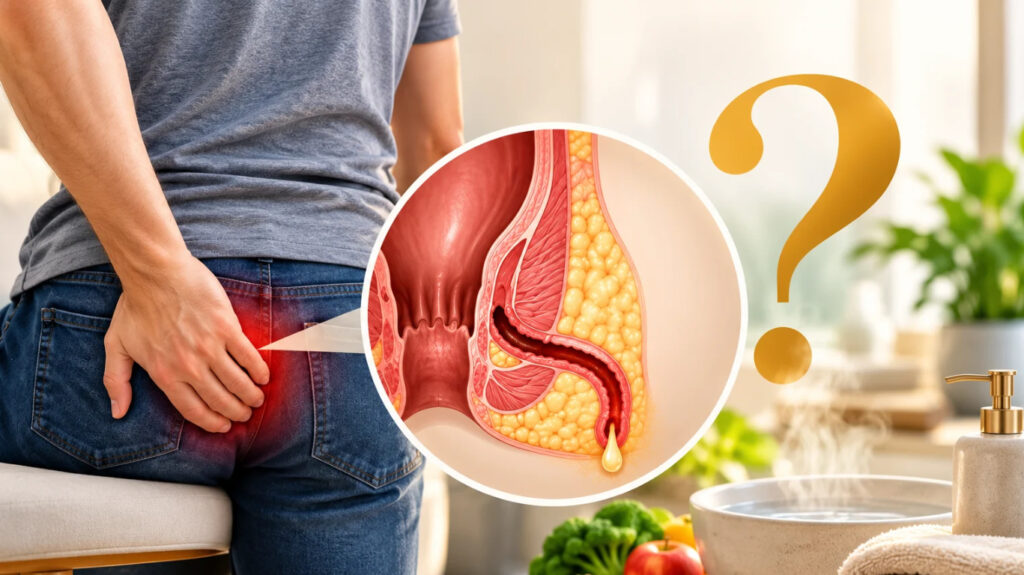
An anal fistula is an abnormal tunnel connecting the inside of the anal canal to the skin near the anus.
It commonly develops after an infection causes an abscess in a gland near the anus. When the abscess drains, a small tunnel may remain.
Symptoms can include:
- Persistent or recurring pain near the anus.
- Swelling, redness, or skin irritation.
- Pus or blood-stained discharge.
- An opening in the skin near the anus.
- Repeated abscesses in the same area.
Some people experience periods when symptoms improve, followed by another episode of swelling or drainage.
A temporary reduction in symptoms does not necessarily mean the fistula has healed.
Can an Anal Fistula Heal Without Surgery?
Most anal fistulas do not heal on their own.
Unlike a superficial wound, a fistula forms a passage through deeper tissue. The underlying tunnel can remain even when the external opening temporarily closes.
According to the NHS, surgery is often necessary because anal fistulas rarely resolve without treatment.
However, not every patient needs the same procedure.
The appropriate approach depends on the fistula’s location, whether it branches, how much sphincter muscle is involved, previous treatments, and any underlying condition such as Crohn’s disease.
For some patients, controlling symptoms or maintaining drainage may be part of a longer-term management plan.
What Can Non-Surgical Treatment Actually Do?
1. Medication Can Help Control Certain Infections
Antibiotics may be prescribed when an associated infection requires treatment, particularly when there is spreading skin infection, systemic illness, or certain medical risk factors.
However, antibiotics alone generally cannot eliminate the fistula tunnel.
If an abscess is present, it often needs prompt medical drainage rather than antibiotics alone.
Avoid taking antibiotics without medical advice or assuming that reduced swelling means the underlying problem has resolved.
2. Warm Sitz Baths May Ease Discomfort
A warm sitz bath involves sitting in shallow, comfortably warm water for a short period.
It may help relieve irritation and discomfort around the anal area, particularly after bowel movements.
Use clean water, avoid excessive heat, and gently dry the area afterward.
A sitz bath does not close an established fistula. It is a comfort measure, not a cure.
3. Good Bowel Habits Can Reduce Irritation
Constipation and straining can make symptoms around the anal area more uncomfortable.
Depending on your health needs, a clinician may recommend:
- Adequate fluid intake.
- A balanced diet with suitable amounts of fibre.
- Avoiding prolonged straining during bowel movements.
- Stool-softening medication when appropriate.
These measures can make bowel movements easier, but they do not repair the fistula itself.
4. Gentle Hygiene Can Help Protect the Skin
Persistent drainage may irritate the surrounding skin.
Gently cleaning the area, keeping it dry, and using an appropriate absorbent pad when needed can improve comfort.
Avoid harsh chemicals, unprescribed creams, or attempts to squeeze or drain the affected area yourself.
If discharge or pain increases, seek medical assessment.
Are There Less Invasive Treatments for Anal Fistulas?
Yes. Some procedures aim to treat the fistula while limiting damage to the muscles responsible for bowel control.
These options are often described as minimally invasive or sphincter-sparing. However, they are still medical procedures and should not automatically be described as nonsurgical treatment.
Fibrin Glue
Fibrin glue is injected into the fistula tract to encourage closure.
It avoids cutting the anal sphincter muscles, which can make it appealing in selected circumstances.
However, evidence suggests that results are less reliable than many established surgical approaches, and recurrence is a significant concern.
Major colorectal guidelines do not recommend fibrin glue as a routine treatment for anal fistulas.
Its suitability should be discussed with a specialist rather than assumed.
Seton Placement
A seton is a surgical thread placed through the fistula to help maintain drainage.
A loose seton can reduce the likelihood of trapped infection and may be used before another procedure or as longer-term management in selected complex cases.
However, a loose seton typically controls drainage rather than permanently curing the fistula.
Laser and Endoscopic Techniques
Some specialist centres offer laser treatment or endoscopic procedures designed to close or treat the fistula tract while preserving sphincter muscle.
These approaches may be suitable for selected patients, but long-term effectiveness and recurrence rates remain uncertain.
The fact that a treatment involves a smaller incision or a shorter recovery does not necessarily make it more effective.
LIFT and Advancement Flap Procedures
The LIFT procedure and endorectal advancement flap are established surgical options designed to treat certain fistulas without dividing substantial amounts of sphincter muscle.
They may be considered when a conventional fistulotomy could create an unacceptable risk to bowel control.
Their suitability depends on the anatomy and complexity of the fistula.
Does Crohn’s Disease Change the Treatment?
Yes.
Anal fistulas associated with Crohn’s disease require a different approach from fistulas caused by an infected anal gland.
Treatment may involve medications that control intestinal inflammation, including certain biologic therapies, alongside drainage or surgical procedures when needed. The American Gastroenterological Association’s clinical guidelines provide specific recommendations for treating fistulas associated with Crohn’s disease.
Some patients achieve improved fistula drainage or closure with medical treatment, although outcomes vary.
Care often involves both a gastroenterologist and a colorectal surgeon.
Treatments used for Crohn’s-related fistulas should not be assumed to work in the same way for ordinary anal fistulas.
How Is the Right Treatment Chosen?
A colorectal specialist will assess the location and complexity of the fistula, the surrounding muscles, and any associated infection.
Evaluation may include a physical examination and, when needed, an MRI scan or other imaging to identify the fistula tract.
Important considerations include:
| Factor | Why it matters |
|---|---|
| Fistula location | Helps determine which procedures are suitable |
| Sphincter involvement | Influences the risk of bowel-control problems |
| Previous abscesses or treatment | May indicate recurrence or a more complex tract |
| Crohn’s disease | Can require additional medical treatment |
| Active infection | May need drainage before definitive repair |
| Previous bowel-control difficulties | Affects treatment planning |
The objective is not simply to close the visible opening. It is to treat the underlying fistula while protecting normal bowel function.
When Should You See a Doctor?
Seek medical assessment if you have persistent pain, swelling, discharge, or repeated abscesses near the anus.
Get urgent medical attention if you develop fever, increasing or severe pain, rapidly spreading redness or swelling, or feel significantly unwell.
These may indicate an infection requiring prompt treatment.
People with diabetes, weakened immunity, or other significant medical conditions should be particularly cautious about delaying care.
If you’ve already been diagnosed with an anal fistula, ask whether the treatment being offered is intended to relieve symptoms, maintain drainage, or permanently close the fistula.
This distinction matters when comparing your options.
The Bottom Line
It is possible to manage some anal fistula symptoms without surgery, but symptom relief is not the same as healing.
Warm baths, gentle hygiene, appropriate medication, and bowel-care measures can improve comfort. They generally cannot close an established fistula.
Less invasive procedures may offer alternatives to traditional fistulotomy for selected patients, although each approach has its own benefits, limitations, and risks.
The most useful next step is an accurate diagnosis and a treatment plan that balances lasting healing with protection of bowel control.
Medical Note
This article provides general health information and is not a substitute for individual assessment by a qualified healthcare professional.
Common Questions
A little more clarity.
Can an anal fistula heal naturally?
Most established anal fistulas do not heal on their own. Medical treatment is usually needed for lasting closure.
Can antibiotics cure an anal fistula?
Usually not. Antibiotics may help treat certain associated infections but generally cannot close the fistula tract.
Are there alternatives to traditional fistula surgery?
Yes. Selected patients may be offered sphincter-sparing or minimally invasive procedures, although effectiveness varies.
Can an anal fistula come back after treatment?
Yes. Recurrence is possible, and the risk depends on the fistula’s complexity, underlying cause, and treatment used.
When should you seek medical help?
Seek assessment for persistent pain, swelling, or discharge. Fever, worsening severe pain, or spreading redness requires urgent medical attention.
Sources
- NHS: Anal Fistula Treatment (opens in a new tab)Why most anal fistulas require treatment, and available procedures
- ASCRS: Abscess and Fistula (opens in a new tab)Symptoms, diagnosis, antibiotics, drainage, and surgical treatment
- ASCRS: Clinical Practice Guidelines (2022) (opens in a new tab)Evidence-based recommendations for anal fistula treatment
- AGA: Fistulizing Crohn's Disease Guidelines (opens in a new tab)Medical treatment of fistulas associated with Crohn's disease
Was this helpful?
What could be better? (optional)



Leave a Reply