

What Matters Most
- Look beyond keywords. Product views, abandoned carts, and purchases provide additional signals of shopper interest.
- Target with purpose. Build audiences around meaningful actions and match ads to each group's needs.
- Respect customer privacy. Use permitted data, follow platform rules, and avoid unnecessary tracking.
Every eCommerce marketer has faced this challenge: the campaign is live, the keywords are tight, the clicks are rolling in, and yet the sales don’t match the spend.
The financial impact is hard to ignore. According to Statista, global advertising spend wasted due to invalid traffic reached an estimated $63 billion in 2025, up from under $55 billion in 2022.
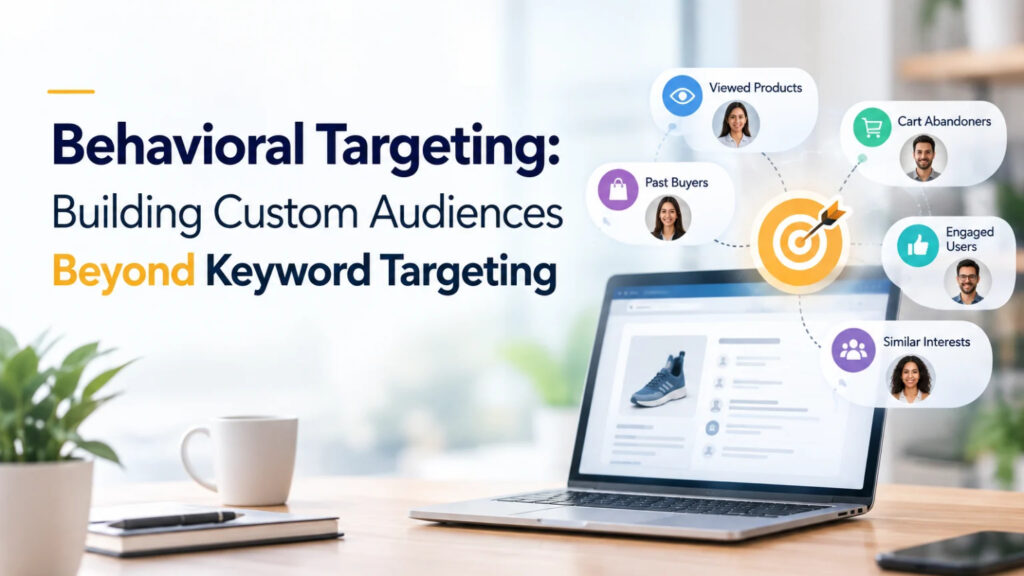
Closing that gap requires shifting focus from passive clicks to verified intent, and that is where behavioral targeting comes in. Instead of bidding on keywords alone, you build audiences from what shoppers actually do, such as pages viewed, items added to cart, repeat visits, past purchases, etc., and then reach them with the right message at the right moment.
In this post, we’ll look at why keyword-only strategies are reaching their limits, which shopping behaviors are worth building audiences around, and how to put those custom audiences to work across Google, Meta, email, and retail media marketplaces like Amazon.
Why Keyword Targeting Alone No Longer Tells the Whole Story
For years, keyword targeting has been the backbone of performance advertising. You choose the terms your buyers type, bid on them, and show up at the right moment. It is simple, measurable, and effective, which is why it’s still the foundation of most search and sponsored ads campaigns.
But it has a built-in limit: a keyword captures what someone typed, not what they’ve done.
What a keyword can’t tell you
A search query is a single data point, and it is missing most of the story. When a shopper types “running shoes,” a keyword campaign has no idea:
- Whether they bought a pair from you last week
- Whether they have viewed the same product five times without buying
- Whether they added it to their cart and left
- Whether they are a first-time visitor or a loyal repeat customer
- Whether they are researching for themselves or buying a gift
All of those people type the same two words, so keyword targeting treats them the same. However, their intent, value, and likely next step are completely different.
An example: three shoppers, one keyword
Here’s an example to help illustrate the point.
Imagine you sell trail running shoes online, and three people search “trail running shoes” on the same morning.
Shopper A is brand new. She is just starting to explore the category, has never visited your site, and is weeks from deciding.
Shopper B has viewed your best-selling shoe four times over the past week, compared sizes, and added it to her cart yesterday before getting distracted.
Shopper C bought the same shoe from you ten days ago. He is searching because he wants to browse accessories, or he is just curious.
A keyword campaign bids the same amount, shows the same ad, and reports the same “click” for all three. The result:
- Shopper A may need education and reassurance, which a bottom-funnel “Buy now” ad doesn’t give her.
- Shopper B is ready to convert and might need only a small nudge, such as a reminder or free returns. She may have bought anyway, so you could be overpaying for a sale you’d have won regardless.
- Shopper C is a wasted impression. He just bought, so showing him the same shoe is irrelevant and can annoy him.
One keyword, three different people, and a single blunt response. That mismatch is where the gap shows up and proves simple keyword targeting isn’t enough for successful ad campaigns.
What Is eCommerce Behavioral Targeting?
Behavioral audience targeting is a digital advertising strategy that uses shoppers’ online activities, interests, and purchase history to create relevant audience segments. It also supports hyper-personalization in marketing, helping brands deliver more relevant experiences based on customer interests and interactions. For eCommerce businesses, these signals may include product page visits, category browsing, add-to-cart actions, past purchases, and repeat-buying patterns.
Behavioral Targeting Vs. Keyword Targeting: The Main Difference
Keyword targeting focuses on the search terms people use, while eCommerce behavioral targeting uses shoppers’ browsing activity, product interactions, and purchase history to understand their interests and potential purchase intent.
For example, an online footwear store can use both approaches to reach shoppers interested in running shoes.
| Comparison | Keyword Targeting | Behavioral Targeting |
| Based on | Search terms and keywords | Browsing patterns and shopping activity |
| What it reveals | What shoppers are actively searching for | Which products shoppers explore, consider, or purchase |
| Example | Targeting users searching for “running shoes for beginners” | Targeting shoppers who repeatedly viewed running shoes or added a pair to their cart |
By combining both approaches, eCommerce advertisers can reach shoppers based on their immediate search intent and broader online shopping behavior, creating more relevant advertising opportunities.
7 Shopping-Behavior Audiences eCommerce Brands Can Build
Not every shopper is ready to buy, and treating every visitor the same can lead to irrelevant ads and wasted ad spend.
Here are seven shopping-behavior audiences you can build to make your advertising more targeted and relevant.
1. Product Page Viewers
Shoppers who visit specific product pages have shown interest but may need more information before buying. Brands can build audiences of visitors who viewed products without adding them to their cart and serve ads featuring product benefits, customer reviews, or similar options.
Example: A footwear store retargets shoppers who viewed running shoes with ads highlighting cushioning, durability, and customer ratings.
2. Repeat Browsers and High-Intent Shoppers
Shoppers who revisit the same product or browse a category multiple times may be actively comparing options. Segmenting these visitors separately from casual browsers can help brands deliver more relevant ads that address common purchase concerns.
Example: An electronics store targets shoppers who repeatedly view a particular laptop with comparison guides, warranty information, or product demonstrations.
3. Cart Abandoners
Cart abandoners are shoppers who add products to their carts but leave without completing the purchase. Brands can create audiences based on this activity and use reminder ads to bring shoppers back, reinforce product value, or address potential barriers such as shipping costs.
Example: A home décor store shows shoppers an ad featuring the exact lamp they added to their cart, along with its key features and delivery options.
4. Checkout Abandoners
These shoppers have progressed further than cart abandoners by starting checkout but leaving before completing their orders. Where tracking and platform capabilities permit, brands can create a separate audience for these users and focus on resolving potential purchase barriers.
Example: A fashion retailer targets checkout abandoners with ads highlighting easy returns, secure payment options, or available delivery choices.
5. Category-Specific Shoppers
Some shoppers consistently explore a particular product category without showing interest in individual products. Grouping them by category engagement helps brands promote relevant collections, bestsellers, and new arrivals instead of showing generic store-wide ads.
Example: A beauty brand targets shoppers who frequently browse skincare products with ads featuring its moisturizers, serums, and skincare bundles.
6. Repeat Customers and Cross-Sell Audiences
Previous purchases provide valuable signals about customer preferences and potential complementary needs. eCommerce customer segmentation by purchase history, product category, and buying frequency helps brands recommend relevant products and encourage repeat purchases.
Example: A fitness equipment store targets customers who purchased dumbbells with ads for workout benches, resistance bands, or other complementary equipment.
7. Lapsed Customers and Win-Back Audiences
Customers who previously purchased from a brand but have not returned within their typical buying cycle may be suitable for re-engagement campaigns. Brands can use purchase recency, order frequency, and past product interests to identify these audiences and offer relevant reasons to return.
Example: A coffee subscription brand targets customers whose usual reorder window has passed with ads featuring new blends, subscription options, or a tailored return offer.
Where to Build and Activate Shopping-Behavior Audiences
Once you have identified the right audience segments, the next step is choosing the right behavioral targeting tools and platforms to build and activate them.
From search and social advertising to Amazon PPC and retail media, each platform offers different ways to use shopper signals to improve campaign relevance and performance. Beyond paid advertising, businesses can also use technology to find new customers through analytics, CRM tools, and digital outreach.
1. Google Ads and Google Analytics
Google Analytics 4 (GA4) tracks shoppers’ activity on your website, including product views, add-to-cart actions, and purchases, when the relevant events are configured. You can use this data to create audiences based on specific actions or combinations of behaviors, such as visitors who viewed a product but didn’t buy it.
By linking GA4 with Google Ads, you can make eligible audiences available for advertising campaigns. For example, a furniture store could retarget shoppers who viewed a sofa with ads highlighting its features or customer reviews. Google Ads also offers predefined and custom audience segments for reaching people based on interests and purchase intent.
2. Meta Ads (Facebook and Instagram)
Meta Ads lets businesses create Custom Audiences from eligible website activity, customer lists, and interactions with their Facebook or Instagram presence. Website-based audiences typically require the Meta Pixel or a supported Conversions API integration to collect relevant events, such as product views and purchases.
For example, a skincare brand could target shoppers who viewed a moisturizer but didn’t purchase it with ads highlighting its benefits or customer reviews. It could also exclude recent buyers from that campaign and show them ads for complementary products instead, where the available audience and campaign settings support these options.
3. Amazon PPC and Amazon Ads
Amazon sellers can use Sponsored Products campaigns to reach shoppers through automatic targeting, which lets Amazon select relevant search terms and products, or manual targeting, which allows sellers to choose keywords and products. While these options help reach shoppers with relevant shopping intent, they are different from creating custom audiences based on browsing behavior.
For more audience-based advertising, eligible advertisers can explore Amazon Ads display advertising and Amazon DSP solutions. Depending on campaign eligibility, these may offer audiences based on product views, shopping interests, or previous purchases. For example, a laptop accessory seller could reach relevant shoppers with ads for laptop stands or wireless mice, using the audience options available for its campaign.
4. Ecommerce CRM and Customer Data Platforms (CDPs)
Customer relationship management (CRM) systems and customer data platforms consolidate information from sources such as purchase records, customer profiles, browsing activity, and marketing interactions. Businesses can use this information to group customers by preferences, buying frequency, and product interests.
For example, an online clothing store could identify customers who frequently purchase activewear and use that segment to promote new collections or complementary products. Where integrations and permissions allow, businesses can also share these audiences with advertising platforms to activate campaigns.
5. Email and SMS Marketing Platforms
Email and SMS marketing platforms help businesses create customer segments using signals such as cart abandonment, browsing activity, purchase history, and engagement with previous campaigns. Automated workflows can then deliver relevant messages based on the shopper’s actions and position in the buying journey.
For example, a home décor store could send a cart reminder to a shopper who left without completing a purchase or recommend complementary items to a previous buyer. Some platforms also integrate with advertising channels, allowing businesses to coordinate customer messaging across email, SMS, and paid media.
6. Retail Media Networks
Retail media networks allow brands to advertise using shopping and purchase signals available within a retailer’s ecosystem. Depending on the platform, advertisers may target audiences based on category interests, product interactions, previous purchases, or other eligible shopper signals.
For example, a beauty brand could use a retail media network to reach shoppers who have browsed skincare products or purchased related items. Walmart Connect and Amazon Ads are examples of this model, although the available audience options, advertising formats, and eligibility requirements vary by platform.
Privacy-First Behavioral Targeting in a Cookieless Era
As privacy regulations evolve and consumer expectations around data protection grow, eCommerce brands need to rethink how they collect and use shopping behavior to build custom audiences. Here are five approaches to consider:
| Strategy | How eCommerce Brands Can Apply It |
| Prioritize First-Party Data | Use consented website interactions, purchase records, and customer-provided preferences to build relevant audience segments. |
| Ensure Consent and Transparency | Explain how customer data is collected and used, obtain consent where required, and respect privacy preferences. |
| Use Aggregated and Privacy-Preserving Insights | Analyze shopping trends and use supported measurement tools to understand campaign performance where individual-level tracking is restricted. |
| Activate Audiences Responsibly | Follow advertising platform policies for customer lists, remarketing, data sharing, and sensitive information. |
| Balance Personalization With Trust | Deliver relevant ads based on legitimate shopping interests without excessive tracking or collecting unnecessary personal information. |
The goal is to make behavioral targeting more relevant without compromising customer trust. By combining responsible data practices with useful audience insights, eCommerce brands can build more sustainable advertising strategies in an evolving privacy landscape.
Turn eCommerce Behavioral Targeting Into Your Next Growth Opportunity
Shifting from search queries (keywords) to shopping signals (behavior) can help eCommerce marketers deliver more relevant campaigns and use their ad spend more effectively.
From repeat product views and abandoned carts to purchase history and category preferences, these signals help you better understand your audience and target them at the right moment.
The next step is to put these insights into action. Start by identifying the online shopping behaviors that matter most to your business, create a few focused audience segments, and match each segment with relevant ad messaging. The right combination of keyword and behavioral targeting can help turn everyday shopping interactions into more effective advertising opportunities.
Author Bio
Ravi Kant is the Vice President of the eCommerce and Photo Editing Division at SunTec India. With over two decades of global experience, he spearheads large-scale digital commerce initiatives that drive operational excellence and measurable ROI for global businesses. His expertise spans eCommerce strategy, digital transformation, and data-driven performance optimization.
Sources
- Google Analytics: Create and Manage Audiences (opens in a new tab)Official guidance on building custom audiences using website and app activity.
- Amazon Ads: Sponsored Products Targeting (opens in a new tab)Explains automatic, keyword, and product targeting options.



Leave a Reply