


What Matters Most
- Recognize the warning signs. Burning odors, smoke, exposed wiring, and repeated breaker trips should never be ignored.
- Check qualifications before hiring. Choose an electrician with the licensing, insurance, and experience required for the work.
- Confirm response time and charges. Ask when help can arrive, what emergency fees apply, and how repairs will be approved.
Electrical problems rarely happen at a convenient time. A sudden power failure, burning smell near an outlet, or unusual buzzing from an electrical panel can leave you wondering how serious the situation is and who to call.
Some problems require immediate attention because of the risk of fire or electric shock.
According to the National Fire Protection Association (NFPA), U.S. fire departments responded to an estimated annual average of 46,652 home electrical structure fires between 2020 and 2024.
Knowing how to respond can help protect your household and prevent a dangerous situation from becoming worse.
Here are three practical steps to finding an emergency electrician quickly, along with precautions to follow until professional help arrives.
What Matters Most
Step 1: Identify the Emergency and Contact an Electrician
The first step is deciding whether the electrical problem requires urgent professional attention.
Electrical faults can sometimes begin with small warning signs. Recognizing them early can reduce the risk of injury or property damage.
Warning Signs That Need Immediate Attention
Burning smells from outlets or switches
A burning plastic or rubber smell near an outlet, switch, or electrical panel may indicate overheating or damaged components.
Do not continue using the affected equipment.
Sparking or smoking electrical equipment
Sparks coming from an outlet, switch, or appliance can indicate a dangerous fault. Smoke or sustained sparking requires immediate attention.
Do not touch or unplug equipment that is actively sparking, smoking, or overheating.
Unusual buzzing from an electrical panel
Loud or persistent buzzing may indicate an electrical problem that requires investigation.
Avoid opening the panel or attempting repairs yourself.
Circuit breakers that repeatedly trip
A breaker that trips repeatedly may be responding to an overload, short circuit, or another fault.
Do not repeatedly reset it or attempt to bypass the protection.
Exposed or damaged wiring
Frayed wires, damaged electrical cords, and exposed conductors can create shock and fire hazards.
Keep people away from the affected area and arrange professional inspection.
Sudden or partial power failures
A power outage affecting only your home, especially when accompanied by flickering lights, unusual noises, or burning smells, may indicate a problem with the property’s electrical system.
If neighboring properties have also lost power, check for a utility outage through your electricity provider.
Who Should You Call?
If there is an immediate threat involving fire, smoke, electrical injury, or a fallen power line, contact emergency services or the electricity utility as appropriate.
For urgent electrical faults within your property, contact a qualified emergency electrician.
When searching for help, look for services that explain the types of emergencies they handle, the areas they cover, and how to request assistance.
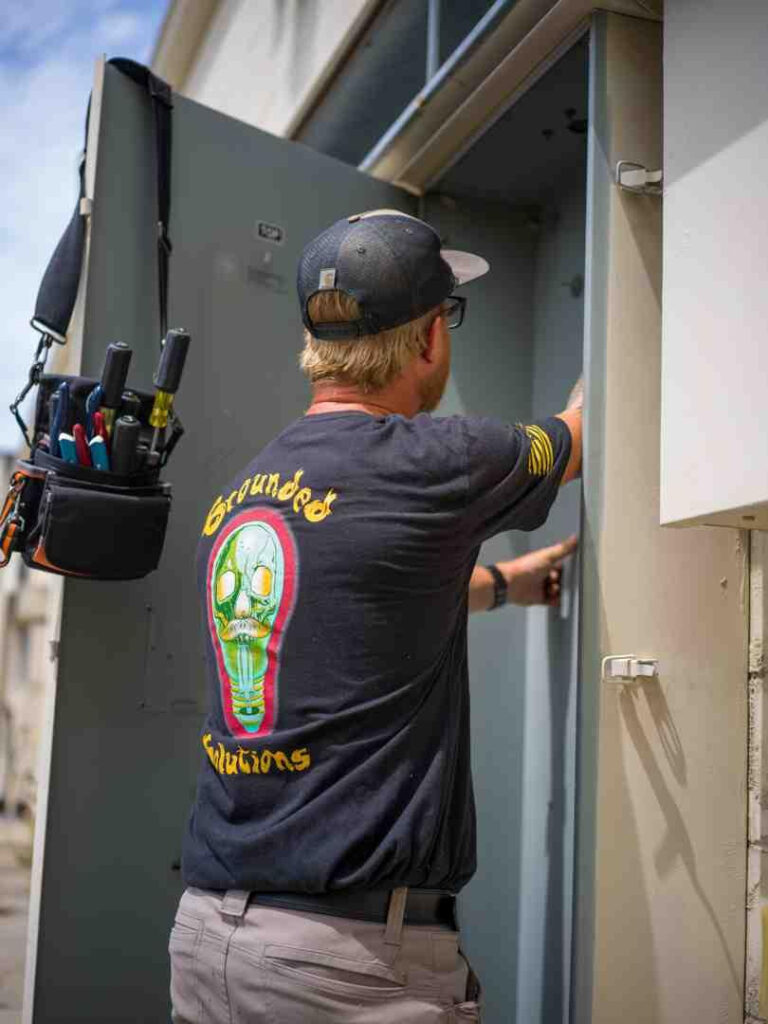
For example, homeowners researching a Grounded Solutions emergency electrical service can review the company’s emergency-service information before contacting the provider.
When calling, explain:
- What happened and when the problem started.
- Whether you noticed smoke, sparks, or a burning smell.
- Which outlets, rooms, or appliances are affected.
- Whether the electricity is completely off or only partially affected.
- Whether anyone is injured or there is an immediate safety concern.
Clear information helps the provider assess the urgency and determine the appropriate response.
Step 2: Verify Licensing, Insurance, and Safety Practices
Finding someone who can arrive quickly is important, but electrical work also requires appropriate qualifications.
Before agreeing to repairs, confirm that the electrician is properly qualified for the job.
Check Licensing Requirements
Electrical licensing requirements vary by location.
Ask whether the electrician or electrical contractor holds the license required by your state or local authority. Where a public verification system exists, use it to check the license.
Licensing helps establish whether a professional meets the applicable requirements to perform electrical work.
Confirm Insurance
Ask whether the contractor carries appropriate liability insurance.
You may also need to check workers’ compensation coverage, depending on local requirements and the nature of the work.
Insurance arrangements vary, so request confirmation rather than assuming coverage.
Ask About Relevant Experience
Not every electrical contractor handles every type of emergency.
Describe the problem and ask whether the electrician regularly works with similar faults, such as:
- Electrical panel problems.
- Damaged wiring.
- Repeated breaker trips.
- Faulty outlets and switches.
- Partial power failures.
An electrician experienced with the relevant equipment may be better prepared to investigate the problem.
Check Safety and Code Compliance
Electrical repairs should follow applicable electrical codes and local regulations.
Ask whether permits or inspections may be required for the proposed work.
A reputable professional should explain the problem, identify the necessary repairs, and avoid recommending shortcuts that compromise electrical safety.
If you’re unsure about a contractor’s qualifications, contact the relevant licensing authority or consider another provider.
Step 3: Confirm Response Time, Pricing, and Repair Terms
Once you’ve identified a qualified electrician, confirm the practical details before scheduling the visit.
Electrical emergencies can happen outside normal business hours, and urgent service may cost more than a routine appointment.
Ask When the Electrician Can Arrive
Confirm whether someone is available to respond and request an estimated arrival time.
Ask whether the company will notify you if the technician is delayed.
Do not assume that advertising emergency service means a technician can reach every address immediately.
If the situation presents an immediate danger, follow emergency safety procedures rather than waiting for an electrician.
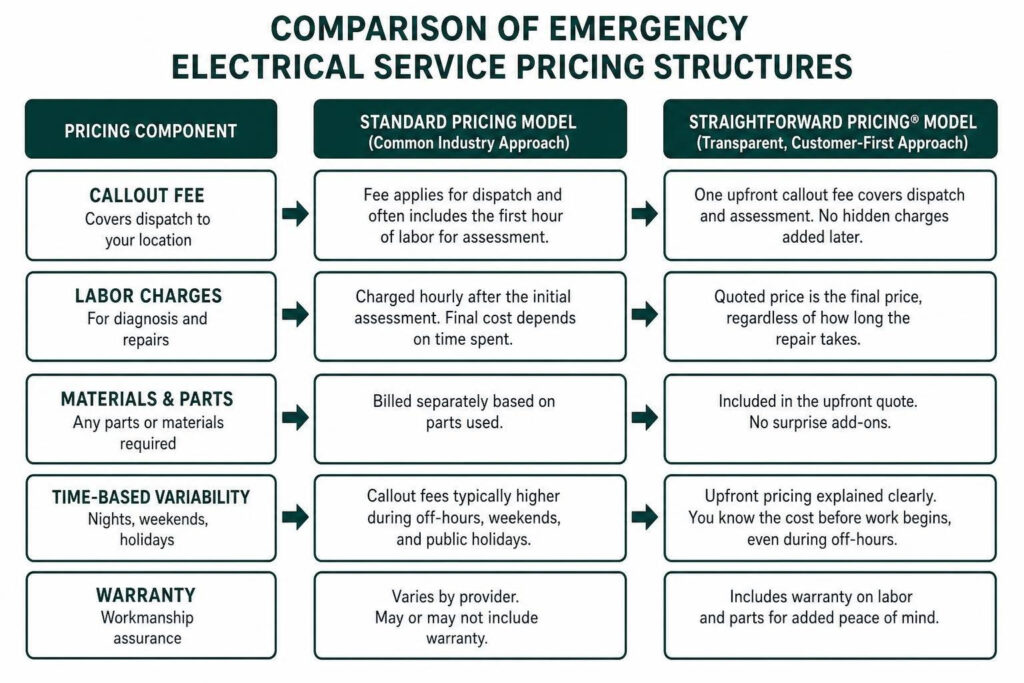
Understand the Emergency Callout Fee
Ask whether the provider charges a separate fee for emergency dispatch.
Find out what that fee includes. Depending on the company, it may cover travel, an initial assessment, or a specified amount of labor.
Also ask whether the charge changes for evenings, weekends, or public holidays.
Here’s a conceptual overview of how emergency service pricing might be structured:
Clarify How Repairs Are Priced
The electrician may need to inspect the system before giving an accurate repair estimate.
Before authorizing additional work, ask:
- Is the diagnostic fee separate from the repair cost?
- Are labor and materials charged separately?
- Will I receive an estimate before repairs begin?
- Are there additional after-hours charges?
- How will unexpected costs be approved?
Some contractors charge hourly rates, while others provide a fixed quote for the diagnosed repair.
Neither approach is automatically better. What matters is understanding the pricing terms before the work begins.
Ask About Warranties
Find out whether the service includes a workmanship warranty or any applicable warranty on replacement parts.
Ask what is covered, how long coverage lasts, and what steps to follow if the problem returns.
Clear repair terms help reduce uncertainty during an already stressful situation.
What Should You Do While Waiting for an Emergency Electrician?
After arranging professional help, your priority is keeping everyone safe.
Stay Away From Dangerous Electrical Equipment
Do not touch exposed wires, sparking outlets, damaged panels, or equipment that is hot or smoking.
Keep children and pets away from the affected area.
Turn Off Power Only If It Is Safe
If you can safely access an unaffected breaker panel, switching off power to the affected circuit may reduce the hazard.
However, do not approach a panel that is smoking, sparking, wet, unusually hot, or otherwise unsafe.
Never attempt to remove covers, handle exposed wiring, or investigate inside the panel.
Leave Immediately If You Notice Fire or Heavy Smoke
If there is an electrical fire or an immediate fire risk, evacuate the building and call your local emergency number from a safe location.
If a fire has already occurred, understanding common mistakes to avoid after a residential fire can help you make safer decisions once emergency responders have brought the situation under control.
Do not attempt to fight a developing fire or use water on energized electrical equipment.
Keep Clear of Fallen Power Lines
Treat every fallen power line as energized.
Stay well away, warn others, and contact emergency services or the electricity utility.
Never approach a fallen wire or objects touching it.
Avoid Using Affected Appliances
Do not continue operating equipment associated with burning smells, overheating, smoke, or repeated electrical faults.
Do not unplug a device if doing so would require touching damaged or unsafe equipment.
Waiting for professional assistance is safer than attempting an electrical repair without the necessary training.
Emergency Electrical Repairs vs. Routine Maintenance
Emergency electrical work may involve extra costs because the electrician must respond urgently, sometimes outside normal working hours.
A routine inspection, by contrast, can be scheduled in advance.
Although not every electrical fault can be predicted, periodic professional inspections can help identify problems before they become emergencies.
An electrician may discover:
- Aging or damaged wiring.
- Loose or deteriorating electrical connections.
- Overloaded circuits.
- Damaged outlets or switches.
- Electrical panels that require repair or upgrading.
The appropriate inspection schedule depends on the property’s age, electrical condition, usage, and local requirements.
Homeowners should also pay attention to recurring warning signs rather than waiting for a complete power failure.
An inspection cannot guarantee that an electrical emergency will never happen, but it can help identify safety concerns and support better maintenance decisions.
Final Thoughts
Finding an emergency electrician quickly comes down to three priorities: recognizing the problem, choosing a qualified professional, and understanding the response and repair arrangements.
When an electrical fault creates an immediate danger, personal safety comes first. Stay away from affected equipment, evacuate when necessary, and contact emergency services before arranging repairs.
For other urgent faults, a qualified electrician can identify the cause, explain the available repair options, and help restore safe operation.
The safest response is not to fix the problem as quickly as possible yourself. It is to recognize the danger and get the right professional help.
Sources
- National Fire Protection Association, Home Fires Caused by Electrical Failure or Malfunction (opens in a new tab)The estimated annual number of U.S. home electrical structure fires during 2020–2024, as well as the associated risks of injury and property damage.
- Electrical Safety Foundation International, Home Wiring Safety Tips (opens in a new tab)Warning signs such as frequent breaker trips, flickering lights, sparks, buzzing sounds, overheating, and damaged wiring, along with the importance of qualified electrical inspections.
- Electrical Safety Foundation International, Downed Power Lines (opens in a new tab)Staying away from fallen electrical lines, treating them as energized, and avoiding contact with nearby objects.
Was this helpful?
What could be better? (optional)


Leave a Reply