

What Matters Most
- Start with the person, not the product. Shared memories, interests, and meaningful moments provide better inspiration than generic customization.
- Choose something that fits their life. A personalized gift is more useful when it reflects the recipient's preferences and how they want to remember someone.
- Think about longevity. Good materials, readable engraving, and careful craftsmanship help keepsakes remain meaningful over time.
An old photograph from a family holiday. A handwritten note from a parent. The date two people first met.
These small details may seem ordinary to someone else, but they can carry years of memories for the people connected to them.
That is what makes a personalized gift meaningful. It brings something specific about a person or relationship into an object they can keep, use, or display.
Whether you’re celebrating a milestone, thanking someone important, or remembering a loved one who has died, the right gift can express something that a standard present might not.
The challenge is choosing a detail that genuinely matters rather than adding a name or photograph simply to make an item look personalized.
Why Do Personalized Gifts Feel More Meaningful?
A personalized gift shows that you have considered what matters to a particular person.
For example, an engraved bracelet bearing a graduation date may remind someone of years of effort. A framed photograph from a family gathering can bring back a moment that everyone remembers differently.
The meaning comes from the connection between the object and the memory.
Personalization does not need to be elaborate or expensive. A short handwritten message placed inside a favorite book may be more meaningful than an expensive item with a generic inscription.
What matters is whether the recipient recognizes the thought behind it.
There is also no guarantee that a customized gift will be appreciated simply because it is personal. Some people prefer practical presents, while others dislike displaying photographs or sentimental messages.
Understanding the recipient’s preferences is part of choosing well.
How Do You Choose a Gift That Reflects Your Relationship?
Begin with what you know about the person rather than browsing products immediately.
Think about a shared experience, a milestone, or an interest that has remained important over time.
A few examples can help:
- For a parent: A photo album with family pictures and short handwritten memories.
- For a partner: A small piece of engraved jewelry marking a meaningful date.
- For a grandparent: A framed family photograph or a keepsake featuring a grandchild’s artwork.
- For a graduate: An engraved pen, journal, or accessory commemorating their achievement.
- For a close friend: Custom artwork referencing a place, hobby, or experience you share.
The most effective choice is not necessarily the most decorative.
Consider where the gift will be kept, whether the person will use it regularly, and whether its design suits their taste.
Someone who prefers simple accessories, for instance, may appreciate a discreet engraving more than a large personalized pendant.
What Should You Personalize?
Names and dates are common options, but they aren’t the only ones.
You might include a short message, a meaningful location, a favorite phrase, or a detail from a shared experience.
Try to keep the personalization focused.
A few carefully chosen words often communicate more than a long inscription that becomes difficult to read.
Before ordering, double-check names, dates, spelling, and the final design. Personalized products are often difficult to return or change once production begins.
How Can Personalized Gifts Preserve Someone’s Memory?
Personalized gifts can also help people remember someone who has died.
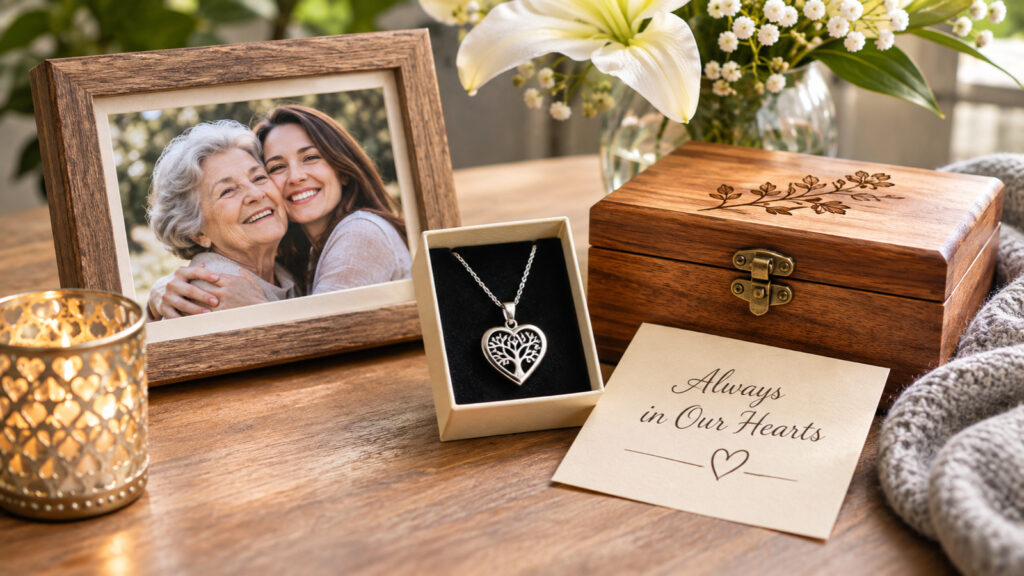
A keepsake might feature a photograph, a handwritten recipe, a signature, or a small object connected to the person.
For example, a family could preserve a grandmother’s handwritten recipe in a framed print. Someone might create an album of photographs showing a parent’s favorite places or important family moments.
These objects do not replace the person. They provide a way to revisit particular memories when someone chooses to.
Some people prefer a private remembrance they can carry rather than something displayed at home.
For those who find comfort in wearable keepsakes, memorial jewelry offers options such as pendants, rings, and bracelets that can incorporate a small amount of cremation ashes, a lock of hair, or another meaningful material.
Such designs are highly personal, and they won’t be right for everyone.
If you’re choosing a memorial gift for someone who is grieving, consider their wishes before arranging anything involving remains or other deeply personal belongings.
A photograph or written memory may be more appropriate, especially when you don’t know how the recipient feels about memorial jewelry.
Give the Recipient Space to Choose
People remember and grieve in different ways.
Some appreciate having photographs and keepsakes nearby. Others prefer to keep personal reminders in a private place or may not feel ready to receive them.
If you’re uncertain, ask gently whether they would welcome a keepsake.
You can also offer to help create a memory album later, rather than making the decision for them.
For those planning a remembrance gathering, our guide to giving a loved one a meaningful goodbye explores personal tributes, shared memories, and ways family and friends can participate.
The purpose is to honor the relationship, not to create an expectation about how someone should express grief.
What Makes a Personalized Gift Last?
A keepsake is more likely to remain useful when the material and design suit its intended purpose.
For jewelry, consider the metal, finish, clasp, engraving method, and care instructions.
For a photo album, look at print quality, binding, and how the photographs will be protected.
For framed artwork, consider the durability of the frame and whether the materials are suitable for long-term display.
If you’re ordering a customized item, check the details before paying:
- Is there a preview of the finished personalization?
- Are names, dates, and messages reproduced accurately?
- What materials are used?
- How should the item be cleaned or stored?
- Can the design be corrected before production?
- What happens if the finished product arrives damaged or incorrect?
These questions matter particularly when the gift includes an irreplaceable photograph, original handwriting, or a small amount of cremation ashes.
Where possible, use a digital copy of an important photograph or document rather than sending away the original.
For memorial jewelry involving ashes or other keepsakes, confirm how the material will be handled, how much is required, and whether any unused portion will be returned.
Quality also needs to be considered alongside cost. A simple, well-made object that can be cared for easily may serve its purpose better than an elaborate item that is difficult to maintain.
When Is a Personalized Gift the Right Choice?
Personalized gifts can suit birthdays, anniversaries, graduations, weddings, family celebrations, and moments of remembrance.
They are particularly meaningful when the occasion is connected to a specific story.
A photograph from a parent’s anniversary, for instance, can celebrate a relationship. A personalized memory book can acknowledge a loved one’s life. A small engraved item may recognize an achievement without turning it into an elaborate ceremony.
But personalization is not required for a gift to be thoughtful.
Sometimes a practical present, a shared experience, or simply spending time with someone is more appropriate.
The best choice depends on what the recipient values.
A Thoughtful Gift Begins With a Meaningful Detail
You don’t need a grand gesture to show someone that they matter.
A photograph they love, a familiar phrase, or a date connected to an important memory can make an ordinary object feel personal.
Choose a detail that belongs to the relationship, select a form the recipient will appreciate, and pay attention to how the finished gift is made.
Whether you’re celebrating someone today or remembering someone you’ve lost, the value of a personalized gift lies in the memory and intention behind it, not simply the customization itself.
Sources
- Northern Care Alliance NHS Foundation Trust, Bereavement: Important Information for Bereaved Family and Friends (opens in a new tab)The role of photographs, locks of hair, handprints, and other keepsakes as personal ways of remembering someone who has died.
- Barts Health NHS Trust, What to Do When Someone Close to You Dies (opens in a new tab)Creating memory boxes and preserving objects with personal meaning, while allowing individuals to decide how privately they wish to keep those memories.
Was this helpful?
What could be better? (optional)




Leave a Reply