

What Matters Most
- Watch for changes, not just visible damage. New cracks, recurring stains, unusual sounds, and declining system performance deserve attention.
- Find the cause before fixing the appearance. Painting over water stains or filling a recurring crack won't resolve the underlying problem.
- Know when to call a professional. Routine visual checks are useful, but suspected structural movement, roof leaks, and unsafe equipment need qualified assessment.
A small stain on the ceiling. A door that suddenly becomes difficult to close. A heating system that takes longer than usual to warm the house.
These changes are easy to dismiss, especially when everything still appears to be working.
But some of the most expensive home repairs begin with signs that homeowners notice long before a system fails.
You don’t need to become a building inspector to recognize when something deserves attention. Knowing what to look for, where to check, and when to call a professional can help you address problems before they become more disruptive.
1. What Are the Warning Signs of Foundation or Structural Problems?
Not every crack in a wall means your foundation is failing.
Homes can develop small cracks as materials expand, contract, or settle. What matters is the crack’s location, appearance, and whether it changes over time.
Pay closer attention to:
- New or widening cracks: Especially those extending diagonally from door or window corners.
- Sticking doors or windows: Particularly when several become difficult to open or close.
- Uneven floors: New slopes, dips, or noticeable changes in floor levels.
- Foundation cracks: Cracks that widen, show displacement, or allow water to enter.
- Basement moisture: Damp walls, water stains, or white mineral deposits known as efflorescence.
A single symptom may have several explanations. For example, a sticking door could result from seasonal humidity rather than structural movement.
However, multiple symptoms appearing together deserve further investigation.
What Should You Do?
Photograph the affected area, record when you noticed the change, and check whether it becomes worse.
Avoid repeatedly patching a crack that continues to reopen.
If cracks are growing, walls are bulging, floors have shifted noticeably, or doors suddenly stop fitting their frames, arrange an assessment by an appropriately qualified structural professional.
Significant or rapidly developing movement should be treated as more urgent than an isolated cosmetic crack.
2. How Can You Spot Water Damage Before It Spreads?
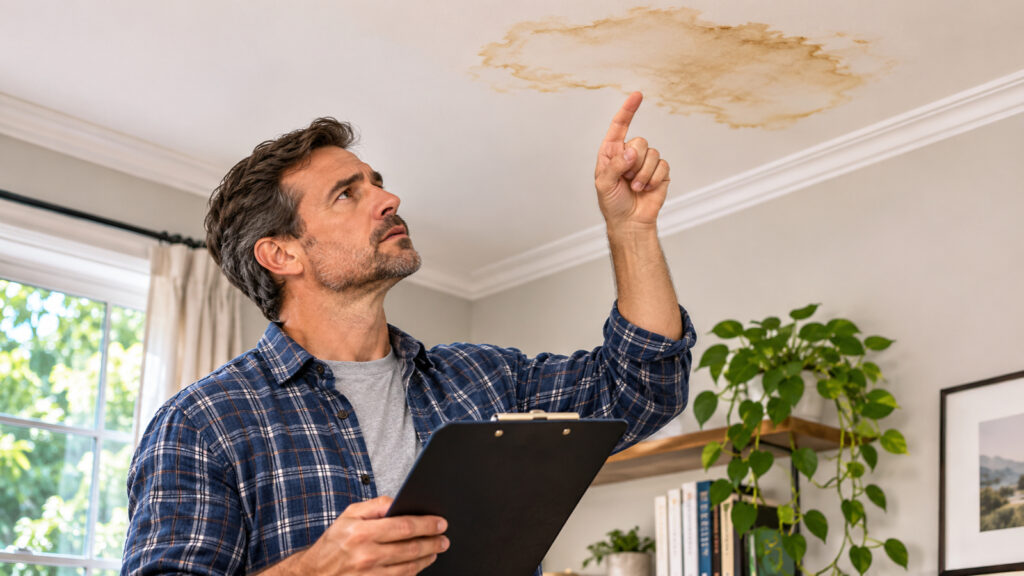
Water damage often becomes visible some distance from the original leak.
A ceiling stain might come from a roof penetration, an upstairs bathroom, or a plumbing connection. Moisture behind a wall may remain hidden until paint starts peeling or the surface becomes soft.
Inspect bathrooms, kitchens, basements, laundry areas, and the spaces around windows and exterior doors.
Common signs include:
- Yellow or brown stains on ceilings and walls.
- Peeling, bubbling, or blistering paint.
- Soft, swollen, or deteriorating drywall.
- Persistent musty odors.
- Dampness beneath sinks or around plumbing fixtures.
- Recurring condensation or mold growth.
- Water collecting near exterior foundation walls.
If you can safely access the attic, look for visible water stains on rafters or roof decking, particularly near vents and chimneys.
Do not walk on ceiling joists or enter areas with unsafe access.
Why Does Moisture Need Prompt Attention?
Moisture can damage wood, insulation, drywall, and other building materials.
It can also create conditions that allow mold to grow.
The U.S. Environmental Protection Agency recommends fixing the source of water intrusion and drying affected materials promptly. When possible, drying wet materials within 24 to 48 hours can reduce the likelihood of mold growth.
Simply repainting a stained surface may hide the evidence temporarily while allowing the underlying damage to continue.
What Should You Do?
Start by identifying where the water is coming from.
A leaking pipe may need a plumber. Water entering around a window could indicate failed sealing or exterior damage. A recurring ceiling stain after rainfall may require a roofing inspection.
If water is near electrical outlets, fixtures, or wiring, keep clear of the affected area and seek qualified help.
For extensive water damage, contaminated water, or widespread mold, professional remediation may be necessary.
3. When Do Your Roof, Gutters, and Exterior Need Attention?
Your home’s roof and exterior help keep rain, wind, and moisture away from the structure.
You don’t need to climb onto the roof to identify many warning signs.
From the ground, look for:
- Missing, cracked, or visibly curling shingles.
- Sections of roofing that appear uneven or damaged.
- Loose or displaced flashing around roof features.
- Gutters that sag, separate, or overflow.
- Downspouts that discharge water close to the foundation.
- Cracked siding, damaged trim, or gaps around exterior openings.
- Rotting wood around windows and doors.
Gutters deserve particular attention because their job is to move rainwater away from the building.
When they become blocked or damaged, water may overflow against siding or collect near the foundation.
How Do You Know Whether the Roof Needs Repair?
A missing shingle after a storm may need a localized repair. Widespread deterioration, recurring leaks, or damage across multiple roof areas may require a more extensive evaluation.
The condition of the underlying roof materials also matters.
A professional roofer can assess the roof covering, flashing, penetrations, and other accessible components to determine what work is appropriate.
For homeowners arranging a roof inspection, Ace Roofing Company is one example of a roofing contractor whose services can be considered when evaluating roof damage and repair needs.
Ask the contractor to explain the observed damage, provide photographs where practical, and distinguish necessary repairs from optional improvements.
Avoid assuming that every leak requires a complete roof replacement.
What Should You Do?
Check the exterior after major storms and periodically throughout the year.
Use binoculars if you need a closer view from a safe location. Do not climb onto a damaged, wet, or steep roof.
If you notice active leaking, storm damage, or visibly displaced roofing materials, arrange a qualified inspection rather than waiting for the next heavy rainfall.
4. What Are the Signs Your HVAC or Plumbing Systems Need Maintenance?
Heating, ventilation, air-conditioning, and plumbing systems can develop problems gradually.
Small changes in performance sometimes appear before equipment stops working.
HVAC Warning Signs
Pay attention when:
- Airflow from vents becomes noticeably weaker.
- The system makes new rattling, grinding, or other unusual noises.
- Rooms no longer heat or cool evenly.
- The equipment runs much longer than usual.
- Water accumulates around indoor equipment.
- The system repeatedly shuts down or fails to maintain the selected temperature.
Some problems may be as simple as a dirty air filter, while others involve refrigerant, electrical components, drainage, or mechanical faults.
Follow the manufacturer’s maintenance recommendations and arrange professional servicing appropriate to the system.
If you smell gas, suspect a carbon monoxide problem, or notice smoke from heating equipment, follow emergency safety procedures rather than attempting repairs yourself.
Plumbing Warning Signs
Inspect visible plumbing around sinks, toilets, washing machines, and water heaters.
Look for:
- Slow or recurring leaks.
- Damp cabinets or flooring.
- Rust or corrosion around connections.
- Unexplained drops in water pressure.
- Recurring slow drains.
- Discolored water.
- Water pooling around the water heater.
A dripping pipe may appear minor, but continued moisture exposure can damage cabinets, flooring, and surrounding materials.
Unusual water pressure or discolored water may have several causes, including plumbing deterioration or changes in the water supply.
What Should You Do?
Keep a record of recurring problems and arrange repairs before they become more serious.
A licensed plumber should investigate persistent leaks, damaged water-heater connections, or unexplained plumbing changes.
For HVAC equipment, consult a qualified technician when performance continues to decline or unusual sounds persist.
Routine visual observations can help you identify problems, but they do not replace professional testing and maintenance.
5. Which Home Maintenance Problems Need Immediate Attention?
Not every problem requires an emergency appointment.
A minor paint crack may be monitored. A clogged gutter may be scheduled for cleaning. A system that gradually becomes less efficient may need routine servicing.
Other situations require faster action.
For situations that cannot wait, our guide to emergency home repairs you should never ignore explains why problems such as roof leaks, burst pipes, and electrical faults require prompt attention.
| Warning sign | Recommended response |
|---|---|
| Rapidly widening structural cracks or obvious movement | Seek prompt structural assessment; leave an unsafe area |
| Active water entering walls or ceilings | Address the water source promptly and arrange repairs |
| Water near electrical equipment | Keep clear and contact a qualified professional |
| Smoke, sparks, or burning smells from electrical equipment | Move away, evacuate if there is danger, and contact emergency services |
| Suspected gas leak | Leave the building and contact the gas utility or emergency services from outside |
| Major roof damage after a storm | Stay clear of damaged areas and arrange professional assessment |
| Minor cosmetic wear without other symptoms | Document and monitor during routine maintenance |
If you are unsure whether a problem is dangerous, avoid investigating equipment or structural areas that may be unsafe.
6. How Often Should You Check Your Home?
A simple maintenance routine is easier to maintain than trying to remember every possible problem.
Monthly: Look beneath sinks, check visible plumbing connections, observe HVAC performance, and note any new moisture or unusual odors.
Seasonally: Inspect visible gutters, downspouts, exterior walls, and drainage areas. Look for changes after heavy rain, snow, or storms.
Annually: Review major maintenance needs and arrange appropriate professional inspections or servicing based on the home’s age, condition, and equipment requirements.
Keep photographs, inspection reports, repair invoices, and warranty information together.
These records can help professionals understand recurring problems and make it easier to track how conditions change over time.
For homeowners who want a more structured approach, the International Association of Certified Home Inspectors provides home maintenance inspection guidance and checklists covering roofs, foundations, plumbing, electrical systems, and other property components.
A Home That Gets Attention Early Is Easier to Maintain
Most homes develop maintenance needs over time. The goal is not to prevent every repair, but to recognize when something is changing and respond appropriately.
A stain that returns after painting, a gutter that overflows during every storm, or a system that keeps losing performance is worth investigating.
Start with regular visual checks. Document unusual changes. Bring in a qualified professional when the cause is unclear or the work involves safety risks.
Paying attention to small warning signs gives you more time to make informed repair decisions, rather than leaving those decisions until something fails.
Sources
- U.S. Environmental Protection Agency, A Brief Guide to Mold, Moisture and Your Home (opens in a new tab)Recognizing moisture problems, addressing water intrusion, drying wet materials promptly, and preventing mold growth.
- International Association of Certified Home Inspectors, Home Inspection Standards of Practice (opens in a new tab)Inspection areas including roofing, gutters, drainage, structure, plumbing, and heating and cooling equipment.
- International Association of Certified Home Inspectors, Home Maintenance Inspection Information (opens in a new tab)Routine property maintenance inspections, inspection guidance, and preventive home maintenance resources.
Was this helpful?
What could be better? (optional)



Leave a Reply