

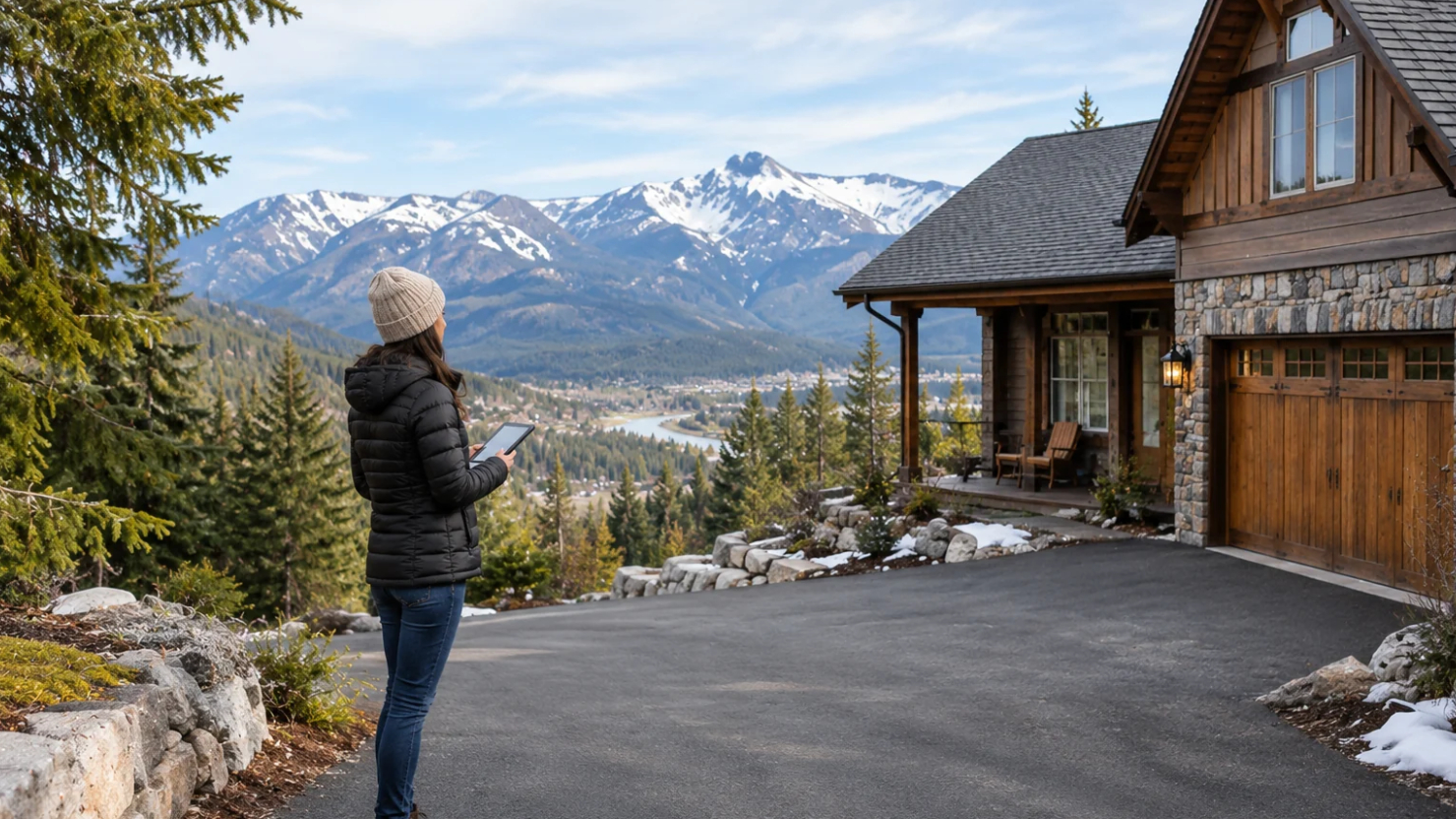
What Matters Most
- Look beyond the view. Road access, drainage, winter conditions, and nearby services can affect everyday life.
- Check the property's systems and risks. Wells, septic systems, insurance, wildfire exposure, and maintenance deserve careful attention.
- Understand the full cost of ownership. Budget for more than the mortgage, especially snow removal, heating, private roads, and major repairs.
Buying a mountain home near Leavenworth, Washington, can mean enjoying Cascade Mountain views, nearby rivers, forest trails, and four distinct seasons.
But a beautiful setting doesn’t always tell the whole story.
A home that feels perfect during a summer showing may present different challenges during heavy snowfall, spring runoff, or wildfire season. Private utilities, steep driveways, road-maintenance arrangements, and insurance costs can also affect whether a property suits your lifestyle.
For buyers exploring the Upper Valley, Leavenworth real estate advisor Camiekae Lynch provides property-search resources for Leavenworth, Wenatchee, Cashmere, and surrounding Central Washington communities.
Whether you’re considering a full-time residence, vacation cabin, or retirement home, these eight checks can help you evaluate a mountain property more carefully.
1. Define How You’ll Use the Property
Before comparing listings, think about how the home will fit into your life.
A full-time residence may require dependable commuting routes, nearby grocery stores, access to healthcare, and reliable internet.
A weekend cabin has different priorities. You may need remote security monitoring, winterization, a local caretaker, and someone available to check the property when you’re away.
Retirement buyers may prefer fewer stairs, a manageable driveway, and easier access to essential services.
If you’re considering rental income, verify the rules before including it in your budget. Short-term rental requirements can vary depending on whether a property is inside Leavenworth city limits or in unincorporated Chelan County.
Check zoning, permits, occupancy limits, parking requirements, taxes, HOA restrictions, and insurance. Do not assume a property can legally operate as a vacation rental simply because nearby homes do.
The right property should support your intended use, not require constant compromises.
2. Compare the Location Beyond the View
Two homes with Leavenworth mailing addresses may offer very different living experiences.
One might be close to town and essential services, while another could involve a longer drive along narrow or winding roads.
Before making a decision, check the actual travel time to:
- Grocery stores and fuel stations.
- Healthcare facilities and emergency services.
- Schools, workplaces, and other regular destinations.
- Main roads and year-round services.
Visit the neighborhood at different times of day, when possible.
Pay attention to traffic, nearby vacation rentals, road noise, sun exposure, wind, and places where snow may accumulate.
A north-facing driveway or shaded section of road, for example, may retain snow and ice longer than a sunnier location.
These details can have a greater effect on daily comfort than the view from the living room.
3. Check Roads, Driveways, and Seasonal Access
Reliable access is one of the most important considerations when buying a mountain home.
Start by finding out whether the road is public, private, shared, gated, or maintained through a homeowners association.
If it’s privately maintained, ask who is responsible for snow removal, grading, drainage repairs, culvert maintenance, and fallen trees.
Review recorded easements and any shared-driveway agreements. A road that looks accessible during a showing may have maintenance obligations that aren’t immediately obvious.
Questions Worth Asking
- Can emergency vehicles, delivery trucks, and moving vans reach the property?
- Does the driveway have steep slopes, sharp turns, or narrow sections?
- Who clears snow, and how quickly is the road usually accessible after a storm?
- Will winter driving require snow tires, chains, or a suitable vehicle?
- Where does rainwater and melting snow drain?
- Are there retaining walls, culverts, or drainage features that need maintenance?
When conditions allow, visit after rainfall or during winter to see how the route performs.
If a seasonal visit isn’t possible, ask for maintenance records, winter photographs, and information from people familiar with the road.
Year-round access should be verified, not assumed.
4. Review Water, Septic, Power, and Internet
Some mountain properties rely on utilities that differ from those in town.
Understanding how these systems operate can help you avoid unexpected repairs and ongoing expenses.
Water Supply
Find out whether the property uses municipal water, a private well, a shared well, a spring, or another permitted supply.
For private or shared systems, request available well records, water-quality test results, maintenance information, and agreements governing access or shared costs.
Consider arranging appropriate water testing as part of your due diligence.
Septic System
If the home has a septic system, ask about its age, pumping and inspection history, permits, tank location, and drain-field condition.
Confirm that the system is appropriate for the property’s approved use and bedroom count. Arrange a qualified inspection where needed.
Heating and Power
Check how the home is heated and what it typically costs during winter.
If propane is used, determine whether the tank is owned or leased and how deliveries work during heavy snow.
Also review the property’s outage history and available backup-power arrangements.
Internet and Other Services
If you work remotely or rely on connected security systems, verify actual internet availability at the address.
Coverage maps are useful starting points, but service quality and speeds should be confirmed with the provider and, where possible, tested at the property.
Don’t overlook practical services such as trash collection, mail delivery, and access for maintenance contractors.
5. Inspect for Mountain-Specific Property Issues
Mountain weather can place additional demands on roofs, foundations, decks, heating equipment, and drainage systems.
Start with a qualified general home inspection. Depending on the property’s condition, additional inspections may be appropriate.
Pay particular attention to:
- Roof and attic: Look for roof damage, signs of ice dams, ventilation problems, and insulation gaps.
- Foundation and drainage: Check for moisture intrusion, erosion, settling, and water moving toward the home.
- Decks and retaining walls: Review structural condition, railings, drainage, and signs of movement.
- Fireplaces and chimneys: Have wood-burning equipment and chimneys evaluated for safe operation.
- Exterior materials: Look for weather damage, deteriorating siding, damaged trim, and wildlife entry points.
- Major systems: Review plumbing, electrical equipment, heating systems, and available permits for previous renovations.
An updated kitchen or attractive interior should not distract from problems that may be expensive to repair.
On sloped properties, specialist advice may be useful if there are signs of unstable ground, retaining-wall movement, or significant drainage problems.
6. Research Insurance and Natural Hazards Before Making an Offer
Insurance costs and coverage availability can significantly affect the affordability of a mountain property.
Request an insurance quote for the specific address early in the buying process, preferably before making an offer.
Ask about coverage, deductibles, exclusions, roof requirements, and any conditions that could affect your ability to obtain or maintain insurance.
Wildfire and Flood Considerations
Mountain properties may face exposure to wildfire, flooding, severe weather, or other natural hazards depending on their exact location.
Research the property’s surroundings, vegetation, drainage, access routes, and any known history of damage.
The Consumer Financial Protection Bureau provides useful guidance on questions about flood and disaster risk when purchasing a home.
Community-level hazard maps can provide additional context, but they should not replace a property-specific review.
Ask whether the property has experienced previous damage, whether repairs were documented, and whether insurance has been difficult to obtain or renew.
Check Rental and Land-Use Restrictions
If you plan to rent the home to visitors, verify the applicable local rules directly with the relevant authority.
Chelan County has specific short-term rental permitting requirements for properties under its jurisdiction. Properties within Leavenworth city limits may be subject to different rules.
Confirm the parcel’s location, zoning, permit status, and any HOA limitations before relying on potential rental income.
Insurance and legal-use questions are best resolved before you become financially committed to the purchase.
7. Calculate the Full Cost of Ownership
The mortgage payment is only part of the cost of owning a mountain home.
A realistic annual budget should also account for:
- Property taxes and insurance.
- Electricity, propane, and other heating costs.
- Snow removal and private road maintenance.
- Driveway, drainage, and retaining-wall repairs.
- Well and septic maintenance.
- Chimney cleaning and roof upkeep.
- Tree removal and vegetation management.
- Security monitoring or caretaker services.
- Travel and contractor costs for unexpected repairs.
If the home will be used only part of the year, include expenses for checking on the property while it’s vacant.
It helps to build two budgets: one for regular annual expenses and another for major repairs or severe-weather events.
A property with a lower purchase price may not be the more affordable choice if its ongoing maintenance costs are substantially higher.
8. Follow a Clear Pre-Offer Timeline
A structured buying process helps keep important checks from being overlooked.
Before touring
Set your budget, preferred location, travel limits, intended use, and essential property features.
During the tour
Observe the driveway, drainage, slopes, roof, utility equipment, storage, sun exposure, and surrounding neighborhood.
Before making an offer
Review available insurance options, property disclosures, zoning, road obligations, HOA documents, and rental restrictions.
During the inspection period
Arrange the general home inspection and any additional septic, well, roofing, chimney, pest, radon, or structural assessments needed for the property.
Before closing
Confirm title matters, recorded easements, permits, utility arrangements, insurance coverage, and any continuing maintenance responsibilities.
Review deadlines and contingencies with your real estate and legal professionals so important checks are completed at the appropriate stage.
Final Checklist Before Buying a Mountain Home
Before moving forward with a property near Leavenworth, make sure you can answer these questions:
- Can you access the home reliably throughout the year?
- Who maintains the road and clears snow?
- Are the water, septic, heating, electrical, and internet systems suitable for your needs?
- Have you reviewed the property’s condition and necessary specialist inspections?
- Is appropriate insurance available at an affordable cost?
- Have you researched wildfire, flood, drainage, and other relevant hazards?
- Are zoning, easements, permits, and rental restrictions understood?
- Can you afford the ongoing maintenance and potential major repairs?
- Does the property support the lifestyle you actually want?
Conclusion
Buying a mountain home in Leavenworth is about more than finding the right view.
Winter accessibility, private utilities, insurance, property condition, and ongoing maintenance all influence what ownership will feel like after the excitement of the purchase has passed.
Taking time to investigate these details, review the necessary documents, and work with qualified local professionals can help you identify potential problems early.
A great mountain home should offer more than a beautiful setting. It should also work for your everyday life, long-term plans, and budget.
Sources
- Chelan County Community Development, Short-Term Rentals (opens in a new tab)Local short-term rental permits, occupancy rules, property requirements, and restrictions for properties in unincorporated Chelan County.
- Washington State Department of Health, Testing Your Water (opens in a new tab)The importance of testing private well water and confirming applicable testing requirements when buying a home.
- Consumer Financial Protection Bureau, What Questions Should I Ask About Flood and Disaster Risk When Buying a House? (opens in a new tab)Reviewing disaster history, insurance availability, flood exposure, and potential ownership costs before purchasing a home.
Was this helpful?
What could be better? (optional)


Leave a Reply