

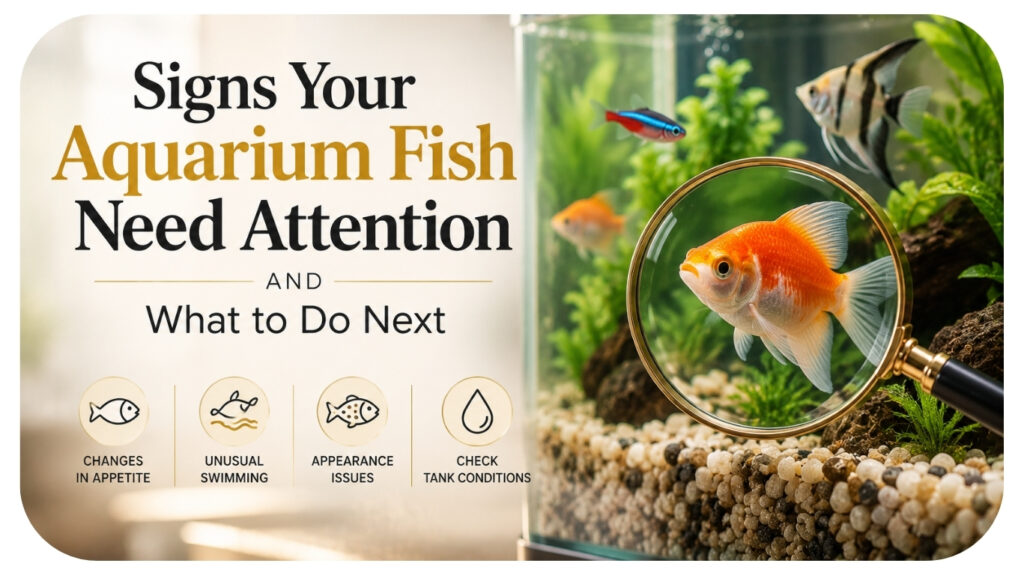
A change in appetite, swimming or appearance deserves attention, even when you don’t yet know what’s causing it. Start by watching your fish and checking the tank before you add anything to the water. Your observations can help a fish-health professional work out what to do next.
Start with what is normal for your tank
You can’t spot trouble if you don’t know the baseline. Take a minute each day to watch how your fish eat and move. Healthy fish are usually alert at feeding time and follow a steady routine. If one fish hangs back or ignores food it once chased, that’s worth noting.
Also watch how fish hold their fins and use the space around them. Fins held tight to the body can signal stress. Rubbing against decor or gravel is another early clue that something feels wrong.
One change alone won’t tell you the cause.
It’s tempting to name a disease from one symptom. Resist that urge. A pale patch or a torn fin can have more than one trigger. Stress and bullying from tankmates can look like illness at first. Write down what you see and when it started so you have clear notes to share.
Look at breathing, balance and body closely
Breathing tells you a lot. Watch the gill covers and mouth for a steady rhythm. Rapid movement or gasping near the surface can point to low oxygen or irritation in the gills. Those signs alone don’t tell you the cause. You’ll need water results and context to make sense of them.
A fish that floats up or struggles to stay level may have a buoyancy problem. This is sometimes linked to diet or infection. Fighting to hold its position is also stressful for the fish. Don’t assume food will fix it.
Then look at skin and fins. Small white dots or frayed edges deserve a closer look. White dots are often discussed as a sign of parasites, yet dots alone aren’t enough to identify the problem. Blotchy color and clamped fins can follow stress or aggression in the tank. Photos taken a day apart help show whether marks are spreading.
Check water, equipment and recent changes first
Before you think about medication, look at the living conditions that affect immune response. Poor water quality, stress, overcrowding and new additions without proper separation can contribute to fish health problems, so a careful look at the tank often reveals more than a quick glance at symptoms.
Test the water and write down the numbers. Check ammonia, nitrite, nitrate and pH with a reliable kit, and note the temperature too. Compare results with appropriate conditions for your species and your previous readings. If results are abnormal, share the numbers with an aquatic veterinarian or knowledgeable aquarium professional to plan a suitable correction. Avoid chasing a reading with several additives at once.
Check the equipment next. Make sure the heater holds steady and the filter flow is normal. A change in equipment noise is a reason to investigate, while reduced surface movement can indicate a flow or aeration problem. Watch tankmates for chasing or fin nipping at feeding time. Think back over the past two weeks for changes, since new fish, new decor, a missed cleaning or a shift in light schedule can raise stress.
Decide on next steps with expert input
Medication needs to match the problem, not just a visible symptom. Different infections can require different treatments, and guessing can delay appropriate care. For example, if an aquatic veterinarian recommends a metronidazole product, choosing the right health supplies involves reviewing the active ingredient, strength and label with that advice in mind. Check suitability for your species and other tank inhabitants. Follow the veterinarian’s treatment instructions and the product’s precautions. Keep biological filtration functioning and adjust chemical filter media only as directed for that treatment.
Separation can help in some cases and hurt in others, so don’t move fish on reflex. If a fish is being bullied or you need a clear view of eating and waste, ask an experienced aquarist or aquatic veterinarian whether a separate observation setup makes sense for your situation. They can also advise how to avoid carrying illness between tanks on nets and hands.
Some signs need prompt attention. Severe breathing difficulty, a fish that can’t stay upright or several fish in distress at once warrant prompt contact with an aquatic veterinarian. Check that filtration and aeration are working while you seek help. Don’t wait days to see if it passes.
Help them settle after a scare
During recovery, aim for stable conditions rather than repeated adjustments. Keep light on a steady schedule and leave hiding spots where they are so shy fish can rest. Stick to your normal upkeep rhythm and avoid rearranging the tank while they regain appetite and color. Avoid loud taps on glass and sudden bursts of light at night.
Many owners want to fix things fast by making extra changes. Small, stable steps are kinder. Feed as usual if interest returns and watch waste. Keep notes to share if you need follow-up advice.
Record whether breathing, balance and appetite are returning to the fish’s usual pattern. If signs worsen or return, contact the veterinarian again with your latest water readings and observations. Knowing what normal looks like makes those conversations more useful.




Leave a Reply