

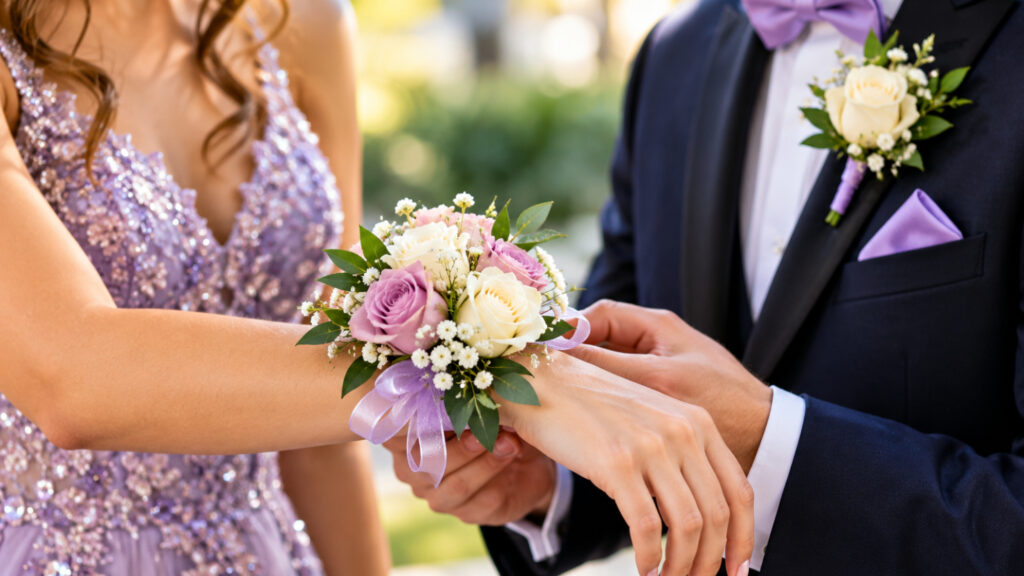
What Matters Most
- Choose flowers that suit your outfit and occasion. Wrist corsages, pin-on designs, boutonnieres, and hand bouquets offer different looks and levels of convenience.
- Coordinate without matching everything. Repeating a flower, ribbon color, or accent can create a polished look.
- Plan ahead and protect freshness. Order early when possible, select suitable blooms, and follow your florist's care instructions.
Flowers can bring a personal touch to a special occasion. Whether you’re attending prom, a formal gala, or another celebration, a well-chosen corsage, boutonniere, or hand bouquet can complement your outfit and make the moment more memorable.
The best floral accessories combine style with practicality. They should look beautiful, feel comfortable, and remain fresh throughout the event.
From choosing flowers to coordinating colors and planning your order, here’s how to find a design that works for you.
Choosing Floral Accessories for Formal Events
Flowers have long been part of formal celebrations, from weddings and dances to milestone occasions.
Corsages and boutonnieres are particularly associated with formal attire. A corsage is a small floral arrangement worn on the wrist or clothing, while a boutonniere is usually a single flower or compact arrangement worn on a jacket lapel.
Hand bouquets offer another option for anyone who prefers carrying flowers rather than wearing them.
Today’s floral accessories can be understated and modern, colorful and expressive, or inspired by traditional styles.
The choice often comes down to your outfit, comfort, and the overall appearance you want to create.
Professional florists can help bring these elements together. For people looking beyond standard designs, custom-designed floral arrangements allow greater choice in flower varieties, colors, ribbons, greenery, and decorative details.
The Tradition of Corsages and Boutonnieres
Wearable flowers have a long association with formal dress and social occasions.
The word corsage is connected to the French term for the bodice of a dress, reflecting the historical practice of attaching small floral arrangements to clothing.
Over time, corsages evolved into different forms, including wrist designs that are now common at proms.
Boutonnieres developed as decorative flowers worn in the buttonhole or lapel of a jacket.
Today, these accessories remain popular because they add a thoughtful detail to formal outfits.
Modern Etiquette for Couples and Friends
Traditional prom customs often involved one person giving a corsage and receiving a boutonniere in return.
However, there is no need to follow rigid rules.
Couples can choose their flowers together, friends can exchange floral accessories, and individuals can select arrangements that reflect their own style.
What matters most is that the gesture feels comfortable and appropriate for the occasion.
If you’re presenting flowers as a gift, consider doing so before the event, perhaps when meeting for photographs.
A boutonniere is traditionally worn on the left lapel. Corsages can be worn on the wrist or attached to clothing, depending on the design.
Designing Custom Floral Arrangements for Prom and Galas
A successful floral accessory should look attractive without becoming uncomfortable or difficult to wear.
For proms and other formal events, florists consider flower size, arrangement weight, structural support, and how the design will interact with the wearer’s clothing.
A large arrangement may look impressive in photographs but become inconvenient during dancing or movement.
A lighter, carefully balanced design can often provide the same visual impact with greater comfort.
Matching Flowers With Outfits
Begin with the colors and details already present in your clothing.
White, cream, or soft pastel flowers can provide a gentle contrast against bold colors. A patterned dress may work better with a simpler arrangement that repeats one of its existing shades.
Metallic accessories can also guide the choice of ribbons, decorative wire, or other accents.
For coordinated outfits, the corsage and boutonniere do not need to look identical.
Using one shared flower variety, complementary colors, or similar greenery can create a connection without making the accessories feel overly matched.
Wrist Corsages, Pin-On Designs, and Hand Bouquets
Different floral styles offer different advantages.
| Floral Style | Best Suited For | What to Consider |
|---|---|---|
| Wrist corsage | Proms, dancing, and hands-free convenience | Should feel lightweight and fit securely |
| Pin-on corsage | Classic formal outfits with suitable fabric | Pins may damage delicate clothing |
| Hand bouquet | Photographs and more expressive floral designs | Must be carried during the event |
| Boutonniere | Suits, jackets, and coordinated formal attire | Needs secure attachment and suitable proportions |
Wrist Corsages
Wrist corsages are convenient because they leave your hands free for photographs, handbags, and dancing.
They are often attached to elastic bands or decorative bracelets.
The arrangement should fit comfortably without sliding around or feeling too heavy.
Pin-On Corsages
Pin-on corsages create a traditional look and work well with suitable bodices, straps, or structured clothing.
However, delicate fabrics such as silk, satin, or heavily embellished materials may be vulnerable to damage.
Ask your florist whether a clip or suitable magnetic attachment would be more practical.
Prom Hand Bouquets
Small hand bouquets, sometimes called a posy or nosegay, offer more flexibility in flower choice and arrangement size.
They can include larger blooms, additional greenery, or distinctive shapes that would be impractical in a wrist corsage.
Their main disadvantage is convenience: you’ll need to carry or safely set down the bouquet during the event.
Choosing Flowers, Accents, and Attachments
The flowers themselves affect both the appearance and durability of the finished arrangement.
Spray roses, carnations, and certain orchid varieties are commonly used for formal accessories because they can provide attractive shapes and good performance when properly handled.
Ranunculus offers delicate, layered petals, although it may require more careful handling depending on the variety and conditions.
Ask your florist which flowers are suitable for the expected temperature, travel time, and length of the event.
A flower that looks beautiful in a refrigerated display may not perform equally well through several hours of warmth and movement.
Small Details That Make a Difference
Ribbons, greenery, pearls, decorative cuffs, and floral wire can help personalize an arrangement.
The attachment method is equally important.
Common options include elastic wristbands, bracelet-style supports, floral pins, clips, and magnetic accessories.
Magnets may reduce the need to pierce fabric, but they still need to be strong enough to secure the arrangement. They may also be unsuitable for some people with implanted medical devices.
For delicate or expensive clothing, discuss the attachment method with your florist before the event.
Coordinating Flowers and Planning Your Budget
Custom floral arrangements can vary considerably in price.
The cost depends on the types of flowers, seasonal availability, arrangement size, design complexity, decorative materials, and the florist’s labor.
A simple corsage made with readily available flowers may cost less than a detailed design featuring specialty blooms, elaborate wiring, or decorative jewelry.
Rather than choosing solely by appearance, decide which features matter most.
You might prioritize a particular flower, a custom color combination, or a comfortable attachment that works with your clothing.
How to Coordinate Without Overspending
A coordinated floral look does not require two elaborate arrangements.
For example, a wrist corsage featuring white roses and eucalyptus could be paired with a smaller boutonniere using a single white rose and matching greenery.
The shared elements create visual consistency while keeping the designs proportionate.
If you’re working within a budget, ask the florist about seasonal flowers and simpler arrangements that maintain the style you want.
When Should You Order Custom Event Flowers?
For prom and other busy seasonal events, ordering at least two weeks ahead is a sensible starting point.
This gives the florist time to discuss the design, source suitable flowers, and confirm the pickup or delivery arrangements.
The Society of American Florists recommends allowing at least two weeks for prom flowers, particularly because popular varieties may be in high demand.
More elaborate designs or large event orders may require additional notice.
When ordering, share:
- The date and approximate time of the event.
- Your outfit colors or a photograph taken in natural light.
- Your preferred flowers and design style.
- Any fabric or attachment concerns.
- Your budget and pickup or delivery preferences.
Some florists can handle last-minute orders, but the available flower varieties and customization options may be limited.
How to Keep Your Flowers Fresh Before the Event
Fresh flowers are sensitive to heat, moisture loss, and rough handling.
Proper care helps them maintain their appearance, but different designs need different treatment.
For Corsages and Boutonnieres
Follow the florist’s specific storage instructions.
Many fresh floral accessories benefit from being kept cool until needed. Suitable refrigeration may help, but freezing temperatures or direct contact with excessively cold surfaces can damage flowers.
Keep delicate petals protected from crushing and avoid unnecessary handling.
Do not assume that every corsage should be sealed in the same type of bag or container. Storage needs can vary by flower and construction method.
For Hand Bouquets
If your bouquet has exposed stems, place it in a clean vase with fresh water when appropriate.
Trim the stems using a clean, sharp tool, remove foliage that would sit below the waterline, and use commercial flower food according to its directions.
Keep the bouquet away from direct sunlight, excessive heat, and drafts.
Check the water regularly and replace it when needed.
These practices help support freshness, although vase life varies between flower species and arrangements.
Wearable flowers without a continuous water supply generally should not be expected to remain fresh for as long as properly maintained vase arrangements.
A Personal Touch for a Memorable Occasion
Flowers are a small detail that can make a formal outfit feel more complete.
Whether you prefer a simple wrist corsage, a traditional boutonniere, or a colorful hand bouquet, the right choice should reflect your style and feel comfortable throughout the celebration.
Plan ahead, coordinate thoughtfully, and ask your florist about suitable flowers and care.
The result does not need to be elaborate. A well-chosen arrangement can make the occasion feel special without distracting from the people and memories that matter most.
Common Questions
A little more clarity.
Which wrist should a prom corsage be worn on?
Traditionally, corsages are often worn on the left wrist, but either wrist is acceptable. Choose whichever feels more comfortable and allows you to move freely.
How can you attach a corsage or boutonniere without damaging clothing?
For delicate dresses, ask about suitable clips or magnetic attachments rather than piercing the fabric. For jackets, a boutonniere may be secured through an appropriate lapel buttonhole or with a floral pin. The best method depends on the fabric and arrangement.
Sources
- Society of American Florists: Prom Flowers (opens in a new tab)Prom flower selection, coordinating corsages and boutonnieres, customization, and ordering at least two weeks in advance.
- Iowa State University Extension: How to Care for Cut Flowers (opens in a new tab)Fresh stem cuts, commercial flower preservatives, clean water, and suitable conditions for maintaining cut-flower freshness.
- Penn State Extension: Give Your Fresh Flowers Some Love (opens in a new tab)The importance of flower food, appropriate cooling, water quality, and variation in the lifespan of different cut flowers.
Was this helpful?
What could be better? (optional)


Leave a Reply