

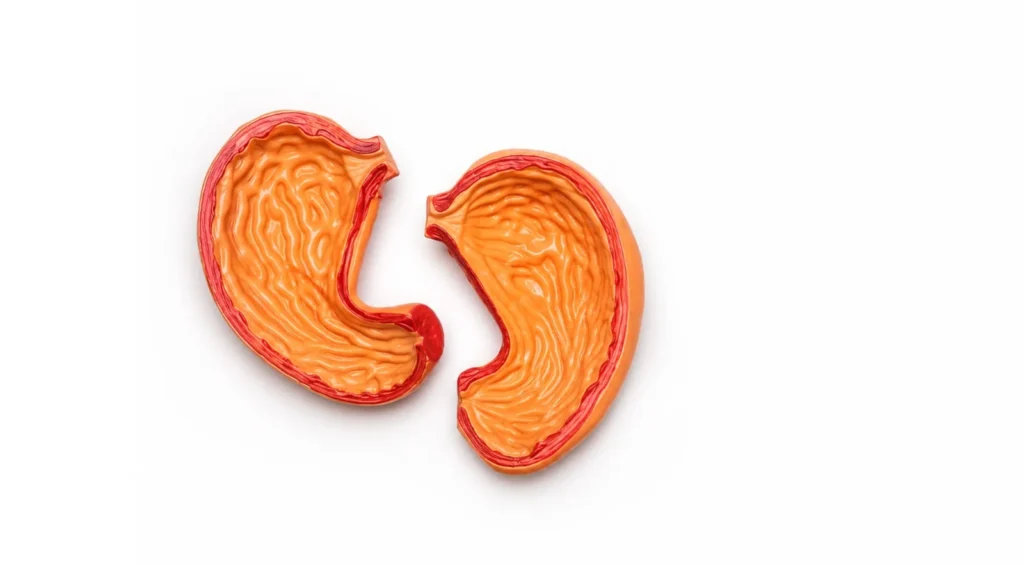
What Matters Most
- The operation depends on the tumour's position and stage. It ranges from removal through a scope for very early cancers to removing the whole stomach.
- Recovery takes time. Most people spend around a week to ten days in hospital, and full recovery can take several weeks to a few months.
- Eating changes after surgery. Smaller, more frequent meals help. After a total gastrectomy, vitamin B12 injections are needed for life.
Being told you need surgery for stomach cancer often brings up a lot of questions at once. How much of the stomach will be removed? How long will you stay in hospital? Will eating ever feel normal again? Knowing the basics can make conversations with your care team feel less overwhelming.
Surgery is one of the main treatments for stomach cancer that has not spread beyond the stomach and nearby lymph nodes. The type of stomach cancer surgery recommended depends on where the tumour sits, how deeply it has grown, the stage of the cancer and your general health. This guide covers the main procedures, how they are carried out and what recovery usually involves.
Why Surgery Is Used for Stomach Cancer
The aim of surgery is to remove the tumour along with a margin of healthy tissue and the lymph nodes around it. Many people also have chemotherapy. It may be given before the operation to shrink the cancer, afterwards to lower the chance of it coming back, or both.
When the cancer is more advanced, surgery may be offered to ease symptoms such as a blockage or bleeding rather than to remove the cancer completely.
Before Surgery: Staging and Planning
Before any operation, doctors need a clear picture of the cancer. This usually involves:
- Gastroscopy with biopsy: a thin camera passed through the mouth to look at the stomach and take tissue samples
- CT scan: to check the chest, abdomen and pelvis for spread
- PET-CT scan: used in some cases to look for spread elsewhere in the body
- Staging laparoscopy: a short keyhole procedure to check the lining of the abdomen for small deposits that scans can miss
- Blood tests and fitness checks: to make sure your body is ready for surgery
- Nutrition review: many patients lose weight before diagnosis, and building strength helps recovery
The results are usually discussed by a team of surgeons, oncologists, radiologists and pathologists, so treatment can be planned in the right order.
Main Types of Stomach Cancer Surgery
Endoscopic resection
Some very early cancers sit only in the inner lining of the stomach. These can be removed through a scope passed down the throat, with no cuts on the abdomen. This is only suitable when the risk of spread to the lymph nodes is very low.
Partial (subtotal) gastrectomy
Part of the stomach is removed, usually the lower section and up to about two thirds of the organ, along with nearby lymph nodes. The remaining stomach is then joined to the small intestine. This is often considered when the cancer is in the lower part of the stomach.
Total gastrectomy
The whole stomach is removed, and the food pipe (oesophagus) is joined directly to the small intestine. This may be needed when the tumour is in the upper or middle stomach, or has spread across a large area.
Lymph node removal
Removing the surrounding lymph nodes is a standard part of gastrectomy. Examining these nodes under a microscope also helps confirm the stage and guide any further treatment.
Procedures to relieve symptoms
If the cancer cannot be removed, a bypass operation, a stent or a feeding tube may help with blockage, vomiting or difficulty eating.
Open, Keyhole and Robotic Approaches
Gastrectomy can be performed in different ways:
- Open surgery: the operation is done through a single larger cut in the abdomen.
- Keyhole (laparoscopic) surgery: several small cuts are made, and a camera guides the surgeon.
- Robotic-assisted surgery: a form of keyhole surgery in which the surgeon controls robotic instruments from a console.
For suitable patients, keyhole approaches may mean smaller wounds, less pain after surgery and a shorter hospital stay. They are not right for everyone. An operation that starts as keyhole surgery may sometimes need to be changed to open surgery for safety. The cancer surgeon makes the choice after considering the size and position of the tumour, any previous abdominal operations and your overall fitness.
Risks to Discuss With Your Surgeon
As with any major operation, gastrectomy carries risks. These can include:
- Bleeding
- Wound or chest infection
- A leak where the bowel has been joined
- Blood clots in the legs or lungs
- Reactions to anaesthesia
Your surgeon can explain how these risks apply to your situation and what is done to reduce them.
What Recovery Usually Looks Like
Many people go home about a week to ten days after a gastrectomy. The stay can be longer if recovery is slower or complications occur. Sips of water usually start within a day or two, building up to small amounts of food over about a week. Full recovery at home can take several weeks to a few months, and tiredness is common during this time.
Eating changes after gastrectomy, and most people need time to find what works. Common advice includes:
- Eating six or more small meals a day instead of three large ones
- Chewing food slowly and well
- Drinking between meals rather than with them
- Including protein at every meal to support healing
- Limiting very sugary foods
That last point matters because of dumping syndrome. This happens when food moves into the small intestine too quickly. It can cause dizziness, sweating, nausea, bloating or diarrhoea, either soon after eating or a few hours later.
Some weight loss is common in the early months. A dietitian can help with meal planning and supplements.
After a total gastrectomy, the body can no longer absorb vitamin B12 from food. Lifelong B12 injections are needed, often every three months. Iron, calcium and vitamin D levels may also be checked regularly. Follow-up visits with blood tests and scans are usually more frequent in the first few years after treatment.
Questions to Ask at Your Consultation
- Which type of surgery do you recommend, and why?
- Will I need chemotherapy before or after the operation?
- Is keyhole surgery an option for me?
- How long am I likely to stay in hospital?
- How will my eating change, and who can help me adjust?
- Who should I contact if I have concerns after going home?
Speak to a Specialist About Your Options
Every stomach cancer diagnosis is different, and the right surgical plan depends on careful assessment. KYM Surgery provides assessment and surgical care for stomach and other upper gastrointestinal conditions at Farrer Park Medical Centre and Mount Elizabeth Medical Centre (Orchard). To find out more, contact their team to book a consultation and discuss which treatment options may suit your situation.

Meet the Cancer Surgeon
Dr Kan Yuk Man is a UK-trained general surgeon with more than 25 years of surgical experience. His practice focuses on minimally invasive (keyhole) upper gastrointestinal surgery, bariatric surgery and general surgery. His qualifications include MB ChB (UK), FRCS (Edinburgh), FRCS (General Surgery) and FAMS (General Surgery). He completed fellowship training in Brisbane, Australia. Dr Kan sees patients at Farrer Park Medical Centre and Mount Elizabeth Medical Centre (Orchard).
This article is for general information only and does not replace medical advice. Please consult a qualified doctor about your individual condition.
Sources
- Cancer Research UK: Types of surgery for stomach cancer (opens in a new tab)Endoscopic resection for very early cancers, how much is removed in partial and total gastrectomy, lymph node removal, keyhole and open approaches, and infection and bleeding risks.
- Cancer Research UK: After surgery for stomach cancer (opens in a new tab)Typical hospital stay, the return to drinking and eating, vitamin B12 injections every three months, and recovery time.
- National Cancer Institute (NIH): Diet and Nutrition After Gastrectomy (opens in a new tab)Six to eight small meals a day, chewing well, keeping fluids away from meals, and expected weight loss.
- Queensland Health: Nutrition after gastrectomy (opens in a new tab)What causes dumping syndrome, its symptoms, and early versus late onset.
Was this helpful?
What could be better? (optional)




Leave a Reply